Is there a serving size?
The first line of the panel. Without it nothing else on the label has a unit. This product gives one — 4 pumps, 0.60 mL — which is how we know a bottle is a hundred days.
An ingredient name tells you what somebody chose. Only a number tells you whether it can do anything.
Written by the Breathizen editorial team·Last updated October 11, 2026·How this page was checked
To check a supplement against its evidence you need four things: the serving size, the amount of each ingredient per serving, the standardisation if the ingredient is an extract, and the dose the research you are comparing with actually used. A complete Supplement Facts panel supplies the first three, and the fourth is a fifteen-minute search. Where no panel is published at all, as here, three of the four are unavailable and no dose comparison can be made for any of the five named ingredients. What can still be done is to read the sources properly, and the European Medicines Agency monograph on mullein is the worked example: it is approved for traditional use rather than well-established use, its indication is relief of sore throat associated with dry cough and cold rather than anything in the lungs, and it covers the flower while this product uses the leaf. Those are three checks a reader can run on any ingredient before the dose question is even reached. And 10:1 is a concentration ratio, not a dose.
Every ingredient in this aisle has a literature behind it, and every one of those literatures is written in doses.
That is not a technicality. It is the difference between a finding and a gesture. A trial that reports an effect reports it at a dose, for a duration, in a population, and the dose is not a detail of the study — it is the intervention.
So a pack that names a studied ingredient has stopped one step short of the thing that matters. The honest question is never is this ingredient studied? It is is this amount of this ingredient studied?
And a ratio is not an amount. The only numeral attached to any ingredient here is 10:1, after Mullein Leaf Extract: ten parts of raw leaf reduced to one part of extract, a manufacturing step and nothing more. A 10:1 extract at 5 mg and one at 500 mg are the same ratio and completely different products. Without a weight beside it, the ratio is decoration.
All four, or the comparison does not work. Most labels give you two or three. This one gives you one.
| What you need | Where it comes from | What happens without it |
|---|---|---|
| Serving size | The first line of the Supplement Facts panel | Every other number loses its unit. This product gives it — 4 pumps, 0.60 mL — and that line is how we know a bottle is a hundred days |
| Amount per serving | The ingredient's own line on the panel | Nothing can be compared. Inside a blend a ceiling is still calculable; with no panel, not even that. Here: none, for all five |
| Standardisation | A percentage beside an extract, naming the marker compound | A weight of powder cannot be turned into a quantity of the compound the trials measured. None here |
| The studied dose | The paper, monograph or public-health source you compare with | You are comparing against nothing — which is what a marketing claim invites |
Three of the four are printed on a complete label and the fourth is a fifteen-minute search. It is arithmetic a label either enables or prevents, and this label prevents it.
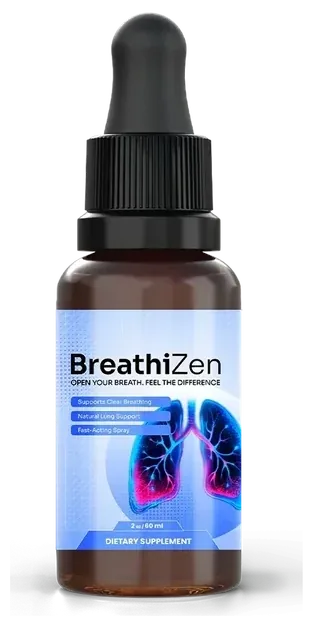
Breathizen is a 2 oz / 60 mL liquid, taken as four pumps — 0.60 mL — once a day. It names five ingredients: mullein leaf, ginger root, bromelain, lemon and cordyceps. No Supplement Facts panel was supplied with it in any form, so not one of those five carries a printed amount. What can be checked is the arithmetic: 60 mL at 0.60 mL a day is a hundred days a bottle, not thirty.
60-day money-back window · from $0.49 a day · 100 days a bottle · ships from the USOne. Read the serving size, and check it against the suggested use. A panel written per two tablets and an instruction to take one describe different doses. Here the disagreement is not about quantity but about mechanism: the directions say “spray 4 pumps (0.60 mL) into the mouth or onto the tongue once daily”, and the cap in every photograph is a rubber-bulb dropper.
Two. Find your ingredient's line and take the number. If it has one, you are nearly finished. If it sits inside a proprietary blend, take the blend total, count the position in the descending list and divide: that gives a ceiling, never a floor. If there is no panel, stop and write down what is missing.
Three. Convert it, if it is an extract. A stated percentage of a named marker compound turns a weight of powder into a weight of the thing the trials measured. An extract with no percentage is a bag whose contents are unstated, and 10:1 describes how the bag was filled, not how heavy it is.
Four. Set the two numbers side by side. Both of them, with their units, in a column, before you form any opinion. Almost every disappointment in this aisle is visible at this step, by a factor rather than a margin.
Five. Say what you found out loud. On a product with a panel it sounds like the research used this much and the bottle contains that much. On this one: no amount is published for any of the five, so there is nothing to compare.
Always write the two numbers with their units, next to each other, before you form an opinion. Micrograms and milligrams differ by a thousand: invisible in prose, obvious in a column. Where one number does not exist, write the blank down and leave it blank.
This is the case most guides skip, and it is the case here. No Supplement Facts panel was supplied with this product in any form, and none appears in any artwork we were given. The brand's own How Breathizen Works graphic even has a tile labelled SUPPLEMENT FACTS, drawn as a generic document icon.
So the method stops at step two. There is a serving size, which is more than many products publish; but there is no amount per serving, so nothing to standardise, so nothing to set beside a studied dose. One of the four numbers exists and three do not.
Be exact about what that means. It does not mean the amounts are low. It means nobody outside the company knows what they are, and that includes this desk. What you can still do is worth listing:
Count what is named. Mullein leaf, ginger root, bromelain, organic lemon and organic Cordyceps militaris fruit extract. A list with no amounts still tells you what was chosen, and still lets you read the sources behind each name. Worth knowing while you count: the assets photograph ten botanicals for a five-ingredient formula.
Read the whole-container quantity. It is on the front of every bottle and needs no panel. This one is 2 oz / 60 mL at 0.60 mL a day, so a bottle is 100 days and the container is sixty millilitres, carrier and all. If a source names a daily amount, ask whether sixty millilitres could hold a hundred days of it.
Telephone the seller. Ask for the quantity of each ingredient in 0.60 mL, ask what four pumps means in drops, and ask for the certificate of analysis for lot B-26/BR-1164 — a reference number is not a certificate, and none was supplied. The desk is +1 (302) 200-3480; ask by email too, so the answer is in writing.
Buy the smallest pack and read the label when it arrives. One bottle is $89 and a hundred days; six is $294 and six hundred days against a 60-day window. Everything you need to choose the larger pack is printed on the smaller one.
Whole-container quantity against the daily serving. It needs only the two volumes on the front of the bottle: 60 mL ÷ 0.60 mL is a hundred days, the single most useful figure this label permits.
When a label will not let you compare a dose, the work left sits on the other side of the comparison: reading the source. Take the European Medicines Agency monograph on mullein as the worked example — the one regulator-published document behind any ingredient in this bottle, and it fails three separate checks before the dose question is reached.
Check one: which kind of approval is it? The monograph is approved for traditional use, not well-established use. The difference between those categories is the evidence underneath. The committee “noted the lack of clinical studies with mullein flower medicines” and recorded that “there is insufficient evidence from clinical trials.” A traditional-use monograph records long use, not that something was shown to work.
Check two: what is the indication? It is “relief of sore throat associated with dry cough and cold.” A throat, not a lung — while the front panel says Supports Clear Breathing and Natural Lung Support. Check three: which part of the plant? The monograph covers Verbasci flos, the flower. This product uses the leaf, which is a different preparation.
Those three checks generalise: run them on any ingredient and ask which kind of approval, which indication, which part of the plant. Then be honest about the answers. A source that does not support a claim does not prove a product does nothing — it proves the evidence being pointed at does not apply. Equally, a matching dose proves only that the amount is in the right territory. What the method gives you is a floor: it moves the question from does this plant have a literature to does this bottle deliver what that literature tested.
The first line of the panel. Without it nothing else on the label has a unit. This product gives one — 4 pumps, 0.60 mL — which is how we know a bottle is a hundred days.
Count them, then count the ones with no figure. That ratio describes a product's disclosure better than anything on the front of the bottle. Here it is 0 of 5.
Three checks: which kind of approval, which indication, which part of the plant. On the lead ingredient here, all three point away from the claim on the front.
It is a general explainer about reading labels and reading sources, not advice about any particular product and not medical advice. No dietary supplement may lawfully claim to diagnose, treat, cure or prevent a disease, and a dose comparison is not a judgement about whether anything is suitable for you. If you take prescription medicine, the thing to tell whoever prescribes it is that the amounts here are not published. This site earns a commission on orders placed through it, and no clinician has reviewed these pages.
Not published. Five ingredients are named and not one carries a weight. We cannot tell you, the sales page does not tell you, and without a panel nobody outside the company can. It is worth being exact about what this means: it does not mean the amounts are low. It means they are unknown.
It is a concentration ratio, not a dose. It says ten parts of raw leaf were reduced to one part of extract. It tells you nothing about how much of that extract is in the bottle. A 10:1 extract at 5 mg and a 10:1 extract at 500 mg are the same ratio and completely different products. Without a weight beside it, the ratio is decoration.
We do not know, and we will not guess at a motive. What we can say is what the absence costs you: you cannot compare this product with another, you cannot set any ingredient against the dose its own research used, you cannot judge whether you are paying for a meaningful quantity, and you cannot give a clinician a straight answer about what you are taking.
We cannot tell you, and that is worse than a yes. A proprietary blend is a group of ingredients given one combined weight, which at least tells you the total. Here there is no panel at all, so there is no blend to disclose and no total either. A proprietary blend would be a step up from this.
No published trial exists on this combination, and because no amounts are printed, the usual check cannot be run at all. What we can report is what the reference sources say about the named ingredients, and on human breathing outcomes they are thin to adverse. The EMA approves mullein for traditional use only, for sore throat, and for the flower rather than the leaf in this bottle. NCCIH's ginger page covers nausea, cramps and knee osteoarthritis. The cordyceps summary says “doctors haven't studied them to see if they work.”
One bottle is 100 days against a 60-day window, so no pack can be finished inside it. The smallest is still the smallest bet: $89, $0.89 a day, and the only one that does not commit you to years of a product whose amounts are not published.
The struck-through figures are $179, $537 and $1,074 — which is $179 multiplied by one, three and six. A crossed-out price is a claim about what something used to sell for, and no date is given on which this product sold at $179 a bottle. We print the struck figures because they are on the offer, and we print this note beside them because a reader deserves to know they are arithmetic rather than history. · window runs from purchase · no subscription · not for under 18, pregnancy or nursingWritten and fact-checked by The Breathizenres Editorial Desk, last updated October 11, 2026. A highlighted slot means that value has not been supplied yet and nothing has been invented in its place — why the reviewer line is empty.