Sort the front
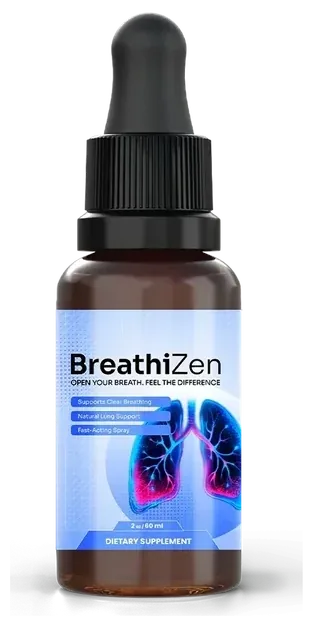
Claims, badges, moods. Three piles. Most fronts are mostly pile three, and this one is three claim bars, a tagline, ten seals, a lung illustration and a net quantity.
Ten minutes that will change how every bottle in the aisle reads, worked on the three claims printed on the bottle this site sells.
Written by the Breathizen editorial team·Last updated October 11, 2026·How this page was checked
A dietary supplement may make a structure-function claim, a statement that an ingredient affects the normal structure or function of the body, such as supports clear breathing. It may not make a disease claim, which 21 CFR 101.93(g)(1) defines broadly as damage to an organ, part, structure or system of the body such that it does not function properly, or a state of health leading to such dysfunctioning. Structure-function claims must carry the FDA disclaimer, and the convention is that each claim is marked with a dagger or an asterisk pointing at it. The disclaimer is a required footnote to permitted claims; printing it does not make an impermissible claim acceptable. This bottle's front panel carries three claim bars, Supports Clear Breathing, Natural Lung Support and Fast-Acting Spray, and on the only product face supplied to this desk not one of them carries a dagger or an asterisk and no FDA disclaimer is visible. No photograph of the back or base of the bottle was supplied, so we can tell you what is absent from what we were shown and nothing beyond that. Separately, no supplement is ever FDA approved: registration puts a facility on a list, and a list is not an approval.
The first is a structure-function claim. It says an ingredient affects the normal structure or function of the body. Supports clear breathing. Supports immune function. Supports digestive comfort. These are permitted, and they must carry the FDA disclaimer.
The second is a disease claim. It says the product diagnoses, treats, cures, mitigates or prevents a disease. That territory belongs to drugs, which go through an approval process a supplement does not and cannot.
Everything else on a pack — badges, seals, adjectives, taglines, the picture on the front — is marketing outside both categories, and most of it carries no defined meaning. This bottle has ten seals and a tagline reading OPEN YOUR BREATH. FEEL THE DIFFERENCE, and none of the eleven commits to anything a reader could check.
Once you can sort a front panel into those three piles, most supplement packaging becomes easy to read. It takes two minutes once you have done it twice, and it is the most useful two minutes available to anybody shopping here.
21 CFR 101.93(g)(1) defines a disease as “damage to an organ, part, structure, or system of the body such that it does not function properly … or a state of health leading to such dysfunctioning”.
That is much broader than most people expect. It captures named conditions, but it also captures states of health that lead to them, which is why the line is not where intuition puts it.
Paragraph (g)(2) then lists the ways a claim can be made. The first factor is the name of the product. Others include statements about the formulation, citations to publications, and pictures or symbols on the label.
This is the part people miss most often. A claim does not have to be a sentence. A product name, a picture, or a phrase printed under a wordmark can all count. Worth holding in mind while looking at this bottle, whose front carries a wordmark built on the word breath and an illustration of a pair of lungs. We are not telling you those cross a line; we are telling you the regulation says a reader should count them as part of what the pack claims.
Because a name travels with the product everywhere: on the shelf, in an advert, in a search result. The regulation treats it as a claim for exactly that reason, and it is the one part of the packaging a buyer cannot avoid reading.
A dagger or an asterisk is a reference mark. Its only job is to connect a claim to the footnote that qualifies it.
On a supplement pack the convention is that each structure-function claim carries one, and the FDA disclaimer answers it: these statements have not been evaluated by the Food and Drug Administration, and this product is not intended to diagnose, treat, cure or prevent any disease. So look at the claims first and ask whether each one is marked; then find the disclaimer and check it is on the same label and reasonably placed, rather than on a website somewhere.
Now do it on this bottle. The front carries three claim bars: Supports Clear Breathing, Natural Lung Support and Fast-Acting Spray. Read at native resolution, not one of the three carries a dagger or an asterisk, and no FDA disclaimer is visible on that face. Be precise about the limit of that finding: the front is the only product face supplied to this desk, and no photograph of the back or base was given to us, so a disclaimer may well be printed somewhere we have not been shown. What we can say is that three claims appear unmarked on the one face we have.
A missing reference mark is rarely the most serious thing about a pack. It is a tell about how carefully the packaging was produced, and production care tends to correlate with other kinds of care. On a product with no Supplement Facts panel at all, it is a small observation standing beside a very large one.
It is a required footnote attached to permitted structure-function claims. It tells the reader that the Food and Drug Administration has not evaluated the statement it is attached to.
It is not a licence. Printing it does not make a disease claim permissible, any more than a warning sticker makes an unsafe product safe. A disclaimer qualifies claims that were allowed to begin with.
It is also not a sign that something is wrong. Almost every supplement carries it, because almost every supplement makes some structure-function claim. Its practical use to a reader is that it confirms the product is sold as a supplement rather than as a medicine, and that nobody has reviewed the claims on the front.
Which is the moment for the sentence this guide exists to put in your hands: no dietary supplement is FDA approved. The agency does not approve supplements for safety or effectiveness before they are marketed, so a page claiming FDA approval for one is simply wrong. The phrase you will meet instead is made in an FDA-registered facility, which is accurate and much weaker than it sounds: registration means the facility is on a list. Not an inspection result, not an endorsement, not a finding about anything made there. A GMP seal is equally narrow, describing rules about process rather than contents — and this product's GMP seal names no certifying body, no certificate number and no laboratory. Nor do the other nine.
| Phrase | Which pile | Why |
|---|---|---|
| Supports Clear Breathing | Structure and function | First of three claim bars on the bottle front. An effect on a normal body function, no disease named. No dagger on the face supplied |
| Natural Lung Support | Structure and function | Names an organ rather than a function, which sits closer to the line. Still unmarked on the face we were shown |
| Fast-Acting Spray | Marketing, and contradicted by the bottle | Not a claim about the body. It is a claim about the delivery — and the cap in every photograph is a rubber-bulb dropper |
| OPEN YOUR BREATH. FEEL THE DIFFERENCE | Marketing | A tagline above the wordmark. No referent, no threshold, nothing to check |
| Made in an FDA-registered facility | Marketing, accurate | A registration. Not an approval, not an inspection result, not a finding about anything made there |
| FDA approved | Never accurate | The agency does not approve dietary supplements before marketing. No supplement is or can be |
| Doctor formulated | Marketing | One of ten seals here. No doctor is named anywhere in the pack as its formulator |
| Natural ingredients | Marketing | No regulatory definition exists for natural on a supplement. Another of the ten seals |
The front of a pack is written by marketing. The Supplement Facts panel is written by regulation. That is why the back of a bottle deserves more attention than the front, and it is why this guide ends here rather than at the claim bars.
The habit is simple: count the ingredients with a printed amount, count the ones with no figure, and write the ratio down. Where ingredients sit inside a proprietary blend, the blend declares only its total weight and lists its contents in descending order by weight, under 21 CFR 101.36(c); individual amounts are not required. Descending order still gives you the useful part: the ingredient in position n cannot exceed the total divided by n. That is the only arithmetic a blend permits, and it produces ceilings rather than amounts.
On this bottle there is nothing to turn round to. No Supplement Facts panel was supplied in any form, and none appears in any artwork we were given. There is no blend either, because there is no panel on which to declare one — and a blend would be a step up from this, since a blend at least publishes a total. The ratio to write down is 0 of 5. There is no other-ingredients list, so the carrier, the preservative and any flavouring are unknown.
Then look for standardisation on anything called an extract: a stated percentage of a named marker compound is what turns a weight of powder into a quantity of the thing the research measured. None is published here. The only numeral attached to any ingredient is 10:1, after Mullein Leaf Extract, and that is a concentration ratio rather than a standardisation or a dose.
Claims, badges, moods. Three piles. Most fronts are mostly pile three, and this one is three claim bars, a tagline, ten seals, a lung illustration and a net quantity.
Amounts printed against amounts hidden. Write the ratio down; it is the single most useful number about any supplement. Here it is 0 of 5, and no photograph of the back was supplied to check it against.
The one paragraph on a pack written by somebody worried about being wrong, and usually the most specific information on the label. None of any kind was supplied with this product.
It is a general explainer about how supplement claims are regulated, written for readers rather than lawyers. It is not legal advice and it is not medical advice, and it makes no claim about what any product does. The regulations are cited by paragraph number so you can read the surrounding text yourself, and the FDA's own page on dietary supplements is in the source list on this site. This site earns a commission on orders placed through it, which is why every worked example above is taken off our own label.
No, and no dietary supplement is. The FDA does not approve supplements for safety or effectiveness before sale. Any page claiming FDA approval for a supplement is wrong. A product made in an FDA-registered facility is not an approved product — registration means the facility is on a list, not that anything in it was tested or endorsed.
That the facility is on a list the FDA keeps. It is not an inspection, not an endorsement and not approval of anything made there. No dietary supplement is FDA approved. Any page telling you otherwise is wrong, and we would not trust the rest of it either.
Nobody is named. No doctor appears anywhere in the pack supplied to this desk as the formulator of this product. A physician's name was supplied, but for a different job — to be printed as the medical reviewer of these pages, which he has not read. We have not printed it there either.
Good Manufacturing Practice describes how a facility operates, not what is in this bottle and not whether this batch was tested. No certifying body and no certificate number is named on this listing. It is also not FDA approval, which no supplement has.
A listing seal says so. We can read no country-of-origin wording on the bottle itself in any photograph supplied to us. Manufacture and sourcing are separate questions, and only manufacture is claimed — nothing says where the botanicals were grown.
Less than they appear to. Not one of them names a certifying body, a certificate number or a laboratory. GMP and Manufactured in USA describe a facility, not a test of this batch. Non-GMO, gluten free, dairy free and vegetarian are composition claims with no panel or other-ingredients list to check them against. Guaranteed pure names no standard and no contaminant.
One bottle is 100 days against a 60-day window, so no pack can be finished inside it. The smallest is still the smallest bet: $89, $0.89 a day, and the only one that does not commit you to years of a product whose amounts are not published.
The struck-through figures are $179, $537 and $1,074 — which is $179 multiplied by one, three and six. A crossed-out price is a claim about what something used to sell for, and no date is given on which this product sold at $179 a bottle. We print the struck figures because they are on the offer, and we print this note beside them because a reader deserves to know they are arithmetic rather than history. · window runs from purchase · no subscription · not for under 18, pregnancy or nursingWritten and fact-checked by The Breathizenres Editorial Desk, last updated October 11, 2026. A highlighted slot means that value has not been supplied yet and nothing has been invented in its place — why the reviewer line is empty.