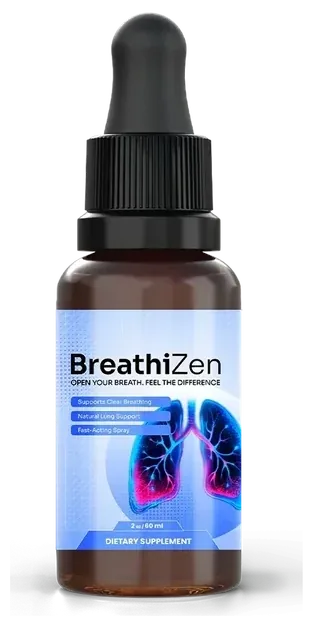
Breathizen Ingredients: Five Names, No Amounts
Five ingredients are named on this product and not one of them carries an amount, so what this page prints instead is what each reference source actually says.
Written by the Breathizen editorial team·Last updated October 11, 2026·How this page was checked
Breathizen names five dietary ingredients: Mullein Leaf Extract 10:1, Ginger Root Extract, Bromelain Powder, Organic Lemon Extract and Organic Cordyceps militaris Fruit Extract. No amount is published for any of the five. No Supplement Facts panel was supplied with this product and none appears in any artwork we were given, so there is no serving-size line, no milligram figure and nothing to recompute. The one figure that is printed, 10:1 on the mullein, is a concentration ratio rather than a dose. The sources do not fill the gap. The European Medicines Agency approves mullein for traditional use only, records insufficient evidence from clinical trials, gives the indication as relief of sore throat associated with dry cough and cold, and covers the flower, while this product uses the leaf. NCCIH's ginger page reports nausea in pregnancy, menstrual cramps and knee osteoarthritis, and mentions asthma once as a traditional use rather than a finding. Bromelain is an enzyme from pineapple stems with no respiratory evidence we would cite. For organic lemon extract we found no source we would cite for any airway outcome. Cordyceps has renal studies, mixed exercise results, and other uses its own summary says doctors have not studied. Ten botanicals are photographed in the marketing assets and five are in the formula.
How you read a panel that was never supplied
Four steps, before any ingredient. This is the whole method of the page, and the first step is the one that decides the other three.
- 010 of 5ingredients with a published amount
Start with what is not here
Five names, five blanks. No Supplement Facts panel was supplied with this product in any form — not a photograph, not a transcription, not a partial — and none appears in any artwork we were given. It is worth being exact about what that means. It does not mean the amounts are low. It means nobody outside the company knows what they are, and that includes us.
- 0210:1a ratio, not a dose
Then refuse the number that looks like one
The mullein is named Mullein Leaf Extract 10:1, and a reader can easily take that for a strength. It is a concentration step: ten parts of raw leaf reduced to one part of extract. A 10:1 extract at five milligrams and a 10:1 extract at five hundred are the same ratio and different products. Without a weight, the ratio is decoration.
- 035 sourcesone opened for each name
Then read what the sources actually say
With no amount to set against anything, the only honest work left is the reference material. So we opened a herbal monograph or a government or hospital summary for each of the five, took the wording it actually uses, and printed it verbatim. On one of the five we found nothing we would cite at all, and that is printed too, in the same words we would use for a finding.
- 0410 photographed5 in the formula
And then look at the pictures
The asset pack supplied with this product contains ingredient stills for ten botanicals. The formula names five. Two of the five extras are sedative and analgesic botanicals rather than respiratory ones. With no panel to read, the artwork is the only ingredient evidence a buyer is given — and it does not match the formula it is selling.
Every ingredient name on this page is the brand's own. Every quotation is from a source this desk opened. Not one amount appears anywhere below, because not one has been published.
The five, one at a time
Tap a name. There is no bar to fill, because no amount is published for any of the five — so what the panel gives you instead is what the reference source for that ingredient actually says.
What our sources recordEMA: traditional use only, and for the flower, not the leaf
The headline ingredient, and the one with the least behind it. The European Medicines Agency has a herbal monograph for mullein — and it is worth reading closely, because it does not say what this bottle implies.
The EMA classifies mullein as traditional use, not well-established use: a category that rests on at least thirty years of use rather than on trials. Its committee “noted the lack of clinical studies with mullein flower medicines” and recorded that “there is insufficient evidence from clinical trials.”
Two details matter more than the headline. The traditional indication is “relief of sore throat associated with dry cough and cold” — a throat, not a lung. And the monograph is for Verbasci flos, the flower. This product uses the leaf.
Finally, 10:1 is a concentration ratio, not a dose. It says ten parts of leaf were reduced to one part of extract and tells you nothing about how much of that extract is in this bottle.
What our sources recordNCCIH: nausea, menstrual cramps, knee osteoarthritis
NCCIH's page on ginger runs through what it has and has not been shown to do: “Research shows that ginger may be helpful for nausea and vomiting associated with pregnancy”; it “might be helpful for reducing the severity of menstrual cramps” and for knee osteoarthritis symptoms. Breathing appears once on that page and not as a finding. A background sentence records that ginger “was traditionally used for a variety of conditions such as asthma, flu, indigestion, and gastrointestinal discomfort.” That is folk history, explicitly framed as such. In every section where NCCIH reports what the research shows, breathing does not appear.
What our sources recordan enzyme from pineapple stems; no respiratory evidence we would cite
“Bromelain is an enzyme that breaks down protein molecules and is obtained from pineapple stems.” The clinical summary we opened supports it for one thing: removing dead tissue from burns, applied topically. On its other uses it is cautious — on arthritis “results from clinical trials are mixed”, and on circulation “there is no proof from clinical trials that it can treat circulatory disorders.” It also carries real interaction notes: bleeding risk alongside warfarin, and raised blood levels of tetracycline antibiotics.
What our sources recordno source this desk uses covers it for breathing
We looked for a monograph, a government fact sheet or a trial covering lemon extract at any dose for airway or breathing symptoms, and found none we would cite. So this site publishes no effect and no comparison for it. On a five-ingredient formula, a flavouring-grade botanical is one fifth of the names.
What our sources recordrenal studies; exercise results mixed; other uses unstudied
The clinical summary we opened records that “in clinical studies, cordyceps products improved renal function” in transplant and dialysis populations, that “studies on exercise performance in healthy subjects yielded mixed results”, and then, plainly: “Cordyceps has other uses, but doctors haven't studied them to see if they work.” It also notes that it “may increase the adverse effects of antidiabetic or anticoagulant/ antiplatelet drugs” and can lower blood sugar.
Positions are the order the brand lists them in. Every bar is empty and every amount reads the same thing, because no Supplement Facts panel was supplied with this product and not one of the five carries a figure. The 10:1 on the mullein is a concentration ratio, not a dose. What each panel carries instead is what the reference source for that ingredient actually records.
The panel, exactly as supplied
A straight transcription of everything this desk was given. Five names, and the same two words in the amount column five times over.
| As named by the brand | Printed amount | % Daily Value |
|---|---|---|
| Mullein Leaf Extract 10:1 | not published | — |
| Ginger Root Extract | not published | — |
| Bromelain Powder | not published | — |
| Organic Lemon Extract | not published | — |
| Organic Cordyceps militaris Fruit Extract | not published | — |
Five ingredients are named and not one of them carries an amount. No panel, no transcription, no partial, no photograph of one. Be exact about what that means, because the sentence is easy to soften: it does not mean the amounts are low. It means that nobody outside the company knows what they are, and that includes this desk. The method this site exists to run — printed figure against studied dose — cannot be run on this product at all.
The footnotenot applicable — no Supplement Facts panel was supplied
The one figure printed anywhere near an ingredient is 10:1, on the mullein, and it is not a dose. It is a concentration ratio: ten parts of leaf reduced to one part of extract. A 10:1 extract at 5 mg and a 10:1 extract at 500 mg are the same ratio and different products, and nothing supplied to us says which one this is.
Other ingredientsnot published — no other-ingredients list was supplied, so the carrier, the preservative and any sweetener or flavouring are unknown
On a liquid, that is the list where the carrier, the preservative and any sweetener or flavouring would be named. It is also the list four of the ten seals on this product would have to be checked against — non-GMO, gluten free, dairy free and vegetarian are claims about what else is in the bottle. None of it was supplied.
The percentages, recomputedThere are none. A printed percentage is the one number on a panel a reader can check without leaving the label, and this product prints none because it prints no panel. Nothing on this page has been recomputed, because nothing was given to us to recompute.
One further detail is worth having beside the mullein line, because it is the ingredient the brand leads with. The European Medicines Agency monograph covers the flower of the plant; this product uses the leaf, and the monograph’s indication is relief of sore throat rather than anything to do with the lungs. So on the headline ingredient the plant part is wrong as well as the amount missing.
There is no dose chart here, so here is the days chart
On every other product this desk has read, this is where the printed amounts are drawn against the doses the research used. On this one no such chart can exist, because no amount is published. What the label does permit is days: 60 mL at 0.60 mL a day, drawn against the sixty-day refund window.
On every other product this desk has read, this chart compares each printed amount with the dose its own research used. For this product that chart cannot exist. Five ingredients are named and not one carries a milligram figure, so there is no bar to draw for any of them.
What is drawn instead is the only numeric comparison this label makes possible: days of supply against the sixty-day refund window. Every figure comes either from the bottle — 60 mL at 0.60 mL a day — or from the brief’s own words.
The shape of it is the finding. Only one bar sits inside the window, and it is the thirty days of use the seller asks for before a claim. Everything you actually buy runs past it, and the cheapest pack runs ten times past it.
A period that sits inside the refund windowA period that runs past itThe full scale, 600 daysone shared linear scale — the upright mark on every row is the 60-day window
Mullein leaf extract 10:1, read closely
It is named first, it is the ingredient the product is built around, and it is the one with the least behind it. That is an uncomfortable sentence to open an ingredients page with, so here is the working.
Mullein has a herbal monograph, and the monograph is worth reading rather than citing. The European Medicines Agency classifies it as traditional use rather than well-established use. Those are two different legal categories: well-established use rests on efficacy data, and traditional use rests on a plant having been used in a particular way for at least thirty years. The committee was explicit about why mullein sits in the second category. It “noted the lack of clinical studies with mullein flower medicines” and recorded that “there is insufficient evidence from clinical trials.”
The indication is a throat, not a lung. The monograph's approved traditional use is “relief of sore throat associated with dry cough and cold.” That is a soothing claim about the upper airway during a cold. It is not a claim about breathing, about airway comfort over months, or about anything the three bars on the front of this bottle describe.
And the monograph is for a different part of the plant. It covers Verbasci flos — mullein flower. This product uses the leaf. We are not asserting that the leaf does nothing; we are telling you that the one piece of regulatory assessment that exists for this plant was not written about the part in this bottle, and that nobody has pointed us at an assessment that was.
Then there is the ratio. Mullein Leaf Extract 10:1 is the only numeral attached to any ingredient on this product, which is exactly why it is worth being blunt about. 10:1 is a concentration ratio and not a dose. It describes a manufacturing step — ten parts of leaf reduced to one part of extract — and tells a reader nothing whatever about how much of the finished extract is in 0.60 mL of liquid.
No amount is published for the mullein. Not on the bottle, not on the sales page, not in the artwork, not in anything supplied to this desk. So the comparison this site normally prints next to an ingredient — the figure on the label against the figure in the research — has nothing on either side of it here: no printed amount, and no trial dose to compare one with.
Because it is the one a buyer is most likely to have looked up, and because a search for mullein returns the EMA monograph near the top. A reader who finds that monograph and stops at the word approved will come away with the opposite of what it says.
Ginger root extract, and the one word that matters
Ginger is the best-documented plant in this formula, which makes what its reference page actually covers worth setting out carefully.
NCCIH's ginger page reports three things. That “research shows that ginger may be helpful for nausea and vomiting associated with pregnancy”; that it “might be helpful for reducing the severity of menstrual cramps”; and that taken orally it may help the symptoms of knee osteoarthritis, while ginger “used topically… has not been shown to be helpful” for that. Three findings, none of them about breathing.
Breathing does appear on that page, once. We want to be precise about this, because the lazy version of this paragraph would be to say that asthma is never mentioned, and that is not true. A background sentence records that ginger “was traditionally used” for a list of conditions including asthma, flu and indigestion. The operative word is the past tense. That sentence is folk history, flagged as such by the people who wrote it, and it sits outside every section of the page that reports what research shows.
So the honest summary is narrower than either side would like. Ginger is not an unstudied plant. It is a well-studied plant whose established uses are nausea, period pain and a sore knee, and whose connection to breathing on the one government page we opened is a historical note rather than a result.
No amount is published for the ginger. Which matters here more than it looks, because the doses in the nausea research are real numbers that a reader could check a label against. There is no label figure to check.
Bromelain powder, from pineapple stems
“Bromelain is an enzyme that breaks down protein molecules and is obtained from pineapple stems.” That is the opening line of the clinical summary we opened, and it is a useful one, because it tells you immediately that this is not a herb in the sense the rest of the formula is. It is an enzyme preparation.
What it is supported for is one specific job in a clinical setting. The summary backs bromelain for debriding burns — removing dead tissue — applied topically, by people whose work that is. On the uses a supplement page would rather talk about, it is careful: “small clinical studies suggest that bromelain helps reduce swelling”, arthritis results are mixed, and on circulation, “there is no proof from clinical trials that it can treat circulatory disorders.”
Nothing on that page concerns breathing, and nothing concerns the airway. We looked for a trial of bromelain at any dose for an airway or congestion outcome that we would cite, and found none. So this site publishes no breathing claim for it and no comparison.
It is also the ingredient on this product with the plainest interaction notes. The same summary records that “preclinical studies suggest bromelain may increase the risk of bruising and bleeding”, with advice against taking it alongside blood thinners such as warfarin, and that it “may increase blood and urine levels” of tetracycline antibiotics. Those are not exotic medicines.
Set that beside the two absences on this product and the problem is obvious. No amount is published for the bromelain, so nobody outside the company can say whether the quantity here is large enough for an interaction note to matter. And no caution or warning panel of any kind was supplied with the product, so a buyer on warfarin is told nothing at all.
Organic lemon extract, and Organic Cordyceps militaris
Organic lemon extract. We looked for a herbal monograph, a government fact sheet or a clinical trial covering lemon extract at any dose for any airway, congestion or breathing outcome, and found none we would cite. So this page publishes no effect for it, no mechanism and no comparison. That is not a criticism of lemon, which is a flavouring in a great many liquids and perfectly unremarkable in one. It is a statement about proportion: on a five-ingredient formula, a flavouring-grade botanical is one fifth of the names, and it is one of the five things a buyer is paying $89 a bottle for. No amount is published for it either.
Organic Cordyceps militaris fruit extract. The clinical summary we opened records that “in clinical studies, cordyceps products improved renal function and reduced nephropathy in renal transplant patients”, and that “studies on exercise performance in healthy subjects yielded mixed results.” Then it says the thing that settles the matter for a breathing product: “Cordyceps has other uses, but doctors haven't studied them to see if they work.”
Breathing is one of those other uses. There is a kidney literature, there is a mixed exercise literature, and for the purpose this bottle is sold for there is a sentence saying nobody has looked.
The cordyceps also carries the longest list of cautions of anything in this formula. The same publisher records that it “may increase the adverse effects of antidiabetic or anticoagulant/antiplatelet drugs”, that it “can also lower blood sugar levels and may cause harm”, that it “may increase your risk of bleeding”, and that it “should not be used by those with myelogenous type cancers.” No amount is published for it, and no warning panel was supplied with the product that mentions any of this.
That is all five. Mullein leaf, ginger root, bromelain, lemon and cordyceps. Five names, and zero published amounts. Two of the five carry documented interaction notes with common prescriptions. One has a regulatory monograph that covers a different part of the plant and a different symptom. One has a research page whose only mention of breathing is in the past tense. And one has no source this desk would cite at all.
Because a dose comparison we cannot source is an invention, and an invention that flatters the product is worse than silence. Five blanks on this page are blanks on purpose, and every one of them could be filled tomorrow by one photograph of a panel.
Ten botanicals photographed, five in the formula
This is the gallery the missing panel makes important, because with no amounts to read, the pictures are the only ingredient evidence a buyer gets. The asset pack supplied with Breathizen contains ingredient stills for ten plants. The formula names five. The five extras are marshmallow root, green tea extract, L-theanine, California poppy seed and corydalis root — and two of those are not breathing ingredients in any sense: California poppy and corydalis are sedative and analgesic botanicals. Green tea extract is the one NCCIH attaches a liver-injury caution to. We are not saying any of the five is in this bottle. We cannot say what is in this bottle at all, because there is no panel — which is also why we cannot say they are not. All ten stills are published below, each labelled for which list it belongs to.


Sixteen things nobody published about this formula
- The Supplement Facts panel. All of it. No panel was supplied to this desk and none appears in any artwork we were given. No serving size to confirm, no amount per serving, no %DV column, no proprietary-blend disclosure either way. This is the single largest absence this desk has encountered on any product.
- An amount for any of the five named ingredients. Mullein, ginger, bromelain, lemon and cordyceps are named and nothing else. A 10:1 ratio is printed for the mullein, which is a concentration step, not a weight.
- The other-ingredients list. On a 60 mL liquid, this is where the carrier, the preservative and any sweetener or flavouring would be declared. Nothing was supplied, so four of the ten seals on this listing cannot be checked even in principle.
- Any caution or warning statement. Nothing on pregnancy, nursing, under-18s, medical conditions or prescription interactions — against two named ingredients that carry documented interaction notes in the sources we opened.
- The FDA disclaimer. It is not visible on the product face supplied to us, beneath three claims that carry no dagger or asterisk. It may be on a back panel. No photograph of the back of this bottle was supplied.
- A manufacturer or distributor. No company name, address or telephone number appears on anything supplied to this desk. The order desk is the seller's phone line; it is not a manufacturer's address.
- A photograph of the back or the base of the bottle. The brief says the lot and best-before are on the base when the bottle shows them. We have not seen the base.
- The certificate of analysis. A reference number is given — B-1164-26-BR — and no certificate. We do not know what it tests for.
- The name of the formulating doctor behind the Doctor formulated seal.
- Storage instructions. Not published, on a liquid botanical product where temperature and light usually matter more than they do for a capsule.
- An expiry or best-before date in anything supplied to us.
- Whether an opened bottle qualifies for the refund, whether a multi-pack can be partly returned, and whether a restocking fee applies.
- Any explanation of what four pumps means on a dropper bottle — a drop count, a line on the pipette, anything.
- Shipping cost, shipping speed and whether it ships outside the United States. The brief says it ships from the US unless the sales page says otherwise, and that tracking arrives in the order email. No prices or timescales are given.
- Any basis for the struck-through prices of $179, $537 and $1,074. They are $179 multiplied by the number of bottles, and no date is given on which the product sold at $179.
- Why the artwork photographs five botanicals the formula does not name — marshmallow root, green tea extract, L-theanine, California poppy seed and corydalis root.
Breathizen Ingredients: Five Names, No Amounts: common questions
How many milligrams of each ingredient are in it?
Not published. Five ingredients are named and not one carries a weight. We cannot tell you, the sales page does not tell you, and without a panel nobody outside the company can. It is worth being exact about what this means: it does not mean the amounts are low. It means they are unknown.
Where is the Supplement Facts panel?
There isn't one. No Supplement Facts panel was supplied to this desk with this product, and none appears in any artwork we were given — not on the bottle front, and no photograph of the back or wrap was supplied at all. The brand's own How Breathizen Works graphic contains a tile labelled SUPPLEMENT FACTS, illustrated with a generic document icon.<p>This is the largest single absence this desk has encountered, and most of this site follows from it.</p>
What does 10:1 mean on the mullein?
It is a concentration ratio, not a dose. It says ten parts of raw leaf were reduced to one part of extract. It tells you nothing about how much of that extract is in the bottle. A 10:1 extract at 5 mg and a 10:1 extract at 500 mg are the same ratio and completely different products. Without a weight beside it, the ratio is decoration.
What is mullein leaf extract?
An extract of Verbascum leaf. The EMA has a herbal monograph for mullein and approves it for traditional use — a category resting on thirty years of use rather than on trials — for “relief of sore throat associated with dry cough and cold.” Its committee “noted the lack of clinical studies”. Two things to carry away: the monograph is for the flower and this product uses the leaf; and the indication is a throat, not a lung. No amount is published here.
What is ginger root extract doing in it?
We do not know, because no amount is published and no rationale was supplied. NCCIH's ginger page reports possible benefit for nausea and vomiting in pregnancy, menstrual cramps and knee osteoarthritis. Asthma appears once on that page, as a condition ginger “was traditionally used” for — explicitly folk history, not a research finding.
What is bromelain?
“An enzyme that breaks down protein molecules and is obtained from pineapple stems.” The clinical summary we opened supports it for removing dead tissue from burns, applied to the skin in clinical settings, and notes that “small clinical studies suggest that bromelain helps reduce swelling.” On circulation: “there is no proof from clinical trials that it can treat circulatory disorders.” No amount is published here.
What does the lemon extract do?
We could not find out. We looked for a monograph, a government fact sheet or a trial covering lemon extract at any dose for an airway or breathing outcome and found none we would cite. On a formula with five named ingredients, that is one fifth of the names with nothing published behind it.
What is Cordyceps militaris?
A fungus. The clinical summary records that “in clinical studies, cordyceps products improved renal function” in transplant and dialysis patients and that exercise results are “mixed” — then states plainly: “Cordyceps has other uses, but doctors haven't studied them to see if they work.” It carries bleeding and blood-sugar cautions. No amount is published.
What else is in it besides the five?
Not published. No other-ingredients list was supplied, so the carrier, the preservative and any sweetener or flavouring are unknown. On a 60 mL liquid this is not a small gap — and it is also what the vegetarian, gluten-free, dairy-free and non-GMO seals would turn on.
If you are going to try Breathizen, try it this way
One bottle is 100 days against a 60-day window, so no pack can be finished inside it. The smallest is still the smallest bet: $89, $0.89 a day, and the only one that does not commit you to years of a product whose amounts are not published.
The struck-through figures are $179, $537 and $1,074 — which is $179 multiplied by one, three and six. A crossed-out price is a claim about what something used to sell for, and no date is given on which this product sold at $179 a bottle. We print the struck figures because they are on the offer, and we print this note beside them because a reader deserves to know they are arithmetic rather than history. · window runs from purchase · no subscription · not for under 18, pregnancy or nursing