Breathizen Side Effects And Safety
No caution or warning panel of any kind was supplied with this product. That absence is the finding on this page, and everything below is read against it.
Written by the Breathizen editorial team·Last updated October 11, 2026·How this page was checked
No caution or warning statement of any kind was supplied with Breathizen. Nothing on pregnancy, nothing on nursing, nothing on under-18s, nothing on medical conditions, nothing on prescription medicines, and no photograph of the back of the bottle to check. Almost every supplement sold in the United States carries some version of that panel. That absence sits against two named ingredients with documented interaction notes in the sources we opened. Bromelain: preclinical studies suggest it may increase the risk of bruising and bleeding alongside warfarin, and it may increase blood and urine levels of tetracycline antibiotics. Cordyceps: it may increase the adverse effects of antidiabetic or anticoagulant and antiplatelet drugs, it can also lower blood sugar levels and may cause harm, it may increase your risk of bleeding, and it should not be used by those with myelogenous type cancers. On the category, NCCIH is unambiguous: evidence does not support using complementary health approaches instead of proven medical management for asthma. And because no amount is published for any ingredient, nobody outside the company can judge whether the quantities here are large enough to matter. That is the point rather than a footnote to it.
What the bottle says about safety
Nothing. That is the entire section, and it is the most important thing on this page, so here is exactly what we mean by it.
No caution or warning statement of any kind was supplied with this product. Nothing on pregnancy. Nothing on nursing. Nothing on under-18s, although the brief says adults 18 and over. Nothing on medical conditions. Nothing on prescription medicines. No consult a physician, no do not exceed the recommended dose.
This is not a panel we judged inadequate. It is a panel that appears in nothing we were given — not on the product face supplied, not on the sales page, not in the artwork, not in the written brief. Almost every supplement sold in the United States carries some version of that warning, and this one carries none.
We will be careful about the limits of that statement. It may be printed on the back of the bottle, and no photograph of the back or the base was supplied. So we cannot tell you it is absent from the product — only that it is absent from everything shown to us, which is everything shown to a buyer.
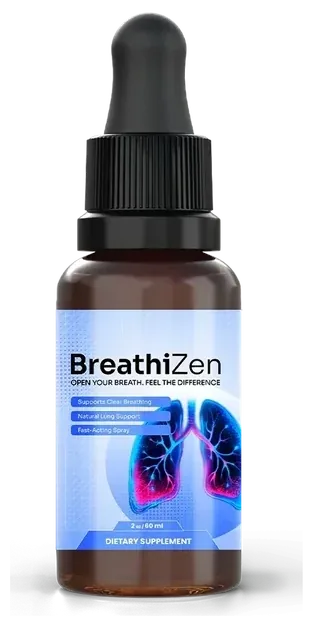
Nor is there an FDA disclaimer visible on the face we were shown, beneath three claim bars carrying no dagger and no asterisk we can see.
A warning panel is the one part of a label written for the reader who should not buy the product. On a product sold for breathing, that reader is easy to name: somebody with a diagnosed airway condition, somebody on a blood thinner, somebody on a diabetes medicine, somebody pregnant. All four are in this product's market, and the label says nothing to any of them.
Before the first dose, email [email protected] or call the order desk on +1 (302) 200-3480 and ask for two documents: the full ingredient declaration with amounts, and whatever caution statement the bottle carries. Ask by email, so the answer is in writing. If neither exists, that is an answer too.
The interaction notes our sources do record
No trial exists on this combination, so no side-effect profile exists for it. What does exist is what the sources say about two of the five named ingredients, and both sets of notes are specific enough to act on.
Bromelain. The clinical summary we opened describes it plainly: “Bromelain is an enzyme that breaks down protein molecules and is obtained from pineapple stems.” On interactions it records that “preclinical studies suggest bromelain may increase the risk of bruising and bleeding”, in the context of warfarin, and that it “may increase blood and urine levels” of tetracycline antibiotics.
Cordyceps. The same publisher records four things worth carrying to an appointment. That it “may increase the adverse effects of antidiabetic or anticoagulant/antiplatelet drugs”. That it “can also lower blood sugar levels and may cause harm”. That it “may increase your risk of bleeding”. And that it “should not be used by those with myelogenous type cancers.”
Two ingredients, and both of the notes point the same way: bleeding. If you take warfarin or any other anticoagulant or antiplatelet medicine, that is two of the five ingredients in this bottle flagged in the same direction by the same publisher, with no caution panel on the product to tell you so. If you take a diabetes medicine, the cordyceps note is the one to raise. If you are having cancer treatment, raise both.
And one note about something that is not in the formula. Green tea extract, the ingredient NCCIH attaches a liver-injury caution to, is photographed in this product's marketing assets while not being named among its five ingredients. We have no reason to think it is in the bottle. We mention it only because five of the ten botanicals photographed in this pack are not in the formula, and because with no panel there is also no way to confirm that it is not. Those two sentences have to be printed together or neither should be.
“It contains mullein leaf, ginger root, bromelain, lemon and cordyceps. The amounts are not published.” On most products you would hand over a photograph of the panel. On this one there is nothing to photograph, and the second sentence is the one that does the work.
Why nobody can tell you how big any of this is
Every interaction note above has the same hole in it. An interaction is a question about quantity. A trace of bromelain in a flavoured liquid and a clinical dose of it are different propositions for somebody on warfarin, and the sources say so by talking about risk rather than certainty.
No amount is published for any ingredient in this product. So nobody outside the company can size any of it: not this desk, not a pharmacist, not the clinician holding your prescription list. We cannot tell you the quantities are too small to matter, because we do not know them. We equally cannot tell you they are large enough to worry about, and we will not imply either.
That cuts in an uncomfortable direction. On a product with a printed panel a clinician can look at a figure and say that is nothing, carry on, which is the answer most of the time. Here the honest answer available to them is I cannot tell. The missing numbers make the reassurance unavailable.
So the practical advice is shorter than the page. If you take an anticoagulant, an antiplatelet or a diabetes medicine, if you are having cancer treatment, if you are pregnant or nursing, or if you manage a diagnosed condition: take the five ingredient names to whoever manages your prescriptions, and say plainly that the amounts are not published. That last clause is the useful part, because it tells them what they cannot assume.
This site is a Breathizen authorized U.S. retailer and it earns a commission on orders placed through it. That is disclosed in the footer of every page, and it is the reason this section is written as plainly as it is: a reader who takes five ingredient names to an appointment before ordering has been better served by us than by a sale.
What the regulator says about the shelf
This is the sentence a product sold for breathing has to be read against, and it comes from the National Center for Complementary and Integrative Health, part of the National Institutes of Health.
“Evidence does not support using complementary health approaches instead of proven medical management for asthma.”
We will be precise about what that digest covers, because the lazy version of this paragraph would overclaim it. The approaches it assesses are acupuncture, breathing techniques, meditation, yoga, omega-3s, probiotics, soy isoflavones and vitamin D. It does not discuss herbal or botanical products for asthma at all. So it is not a verdict on mullein, ginger, bromelain, lemon or cordyceps. It is a statement about the category of thing this product is, and about the one substitution that must not be made.
Read it as the boundary it is. If there is an inhaler in your pocket, nothing on this page, this site or that bottle is a reason to leave it at home.
Two of the ten supplied reviews make the same point unprompted, which is the most creditable thing in the pack. One writes “I keep my inhaler. This is not that. Clinic said keep the inhaler.” Another writes “not an inhaler replacement” in those words. The brand published both, under a front panel that reads Natural Lung Support.
And one thing the sources do not give us. No source we opened records a human respiratory finding for any of the five named ingredients, and for the organic lemon extract we found no source we would cite for any airway outcome at all.
Not specific to this product and worth carrying anyway: if you develop unusual bruising or bleeding, fatigue, nausea, dark urine or yellowing of the skin or eyes while taking anything, stop and speak to someone. On this product there is no warning panel to tell you that.
Six questions before you order
Nothing is sent anywhere and nothing is stored. The answers stay in your browser.
0 of 6 answered
Breathizen Side Effects And Safety: common questions
What are the side effects?
No caution or warning panel was supplied with this product at all — nothing on pregnancy, nursing, under-18s, medical conditions or interactions. That absence is itself the finding, because two of the five named ingredients carry documented interaction notes in the sources we opened.
Is it safe?
We cannot tell you, and neither can the label. No caution panel, no amounts and no other-ingredients list were supplied, so the three things a safety judgement would need are all missing. What we can report is that two of the five named ingredients carry documented interaction notes, and that nothing addresses pregnancy, nursing or under-18s.
Does it interact with any medicines?
From the sources we opened, yes — two of the five named ingredients carry interaction notes. Bromelain: preclinical work suggests it “may increase the risk of bruising and bleeding” with warfarin, and it “may increase blood and urine levels” of tetracycline antibiotics. Cordyceps: it “may increase the adverse effects of antidiabetic or anticoagulant/antiplatelet drugs” and “can also lower blood sugar levels and may cause harm.” Because no amounts are published, nobody can say whether the quantities here are enough to matter. Take the ingredient list to whoever manages your prescriptions.
Can I take this instead of my inhaler?
No. NCCIH is explicit: “Evidence does not support using complementary health approaches instead of proven medical management for asthma.” This is a dietary supplement, not a rescue medicine. Two of the ten supplied reviews make the same point unprompted — one reports that her clinic told her to keep the inhaler.
I take a diabetes medicine. Is that a problem?
Worth a conversation with whoever prescribes it. The cordyceps summary we opened says it “may increase the adverse effects of antidiabetic… drugs” and that it “can also lower blood sugar levels and may cause harm.” Because no amount is published, nobody can say whether the quantity here is enough to matter — which is itself the reason to ask.
I take a blood thinner. Is that a problem?
Again, worth asking first. Two of the five named ingredients carry bleeding-related notes: bromelain “may increase the risk of bruising and bleeding” with warfarin, and cordyceps “may increase your risk of bleeding.” With no amounts published, the size of that risk cannot be estimated by anyone outside the company.
Can I take it if I am pregnant or nursing?
Nothing supplied with this product addresses pregnancy or nursing, which is precisely why we would not tell you it is fine. Ask your clinician, and take the ingredient list with you.
Can under-18s take it?
The brief says adults 18 and over. There is no warning panel behind that, because no warning panel was supplied.
Should I talk to a doctor first?
On this product, more than most — and for an unusual reason. Normally you would take the panel to a clinician so they can see the doses. Here there is no panel to take. The most useful thing you can do is show them the five ingredient names and your current prescriptions, and tell them the amounts are not published.
If you are going to try Breathizen, try it this way
One bottle is 100 days against a 60-day window, so no pack can be finished inside it. The smallest is still the smallest bet: $89, $0.89 a day, and the only one that does not commit you to years of a product whose amounts are not published.
The struck-through figures are $179, $537 and $1,074 — which is $179 multiplied by one, three and six. A crossed-out price is a claim about what something used to sell for, and no date is given on which this product sold at $179 a bottle. We print the struck figures because they are on the offer, and we print this note beside them because a reader deserves to know they are arithmetic rather than history. · window runs from purchase · no subscription · not for under 18, pregnancy or nursing