There is no dose ladder on this site
On every other product this desk has read, this chart compares printed amounts with studied doses. Here it cannot exist. What follows is the only numeric comparison this label makes possible.
Written by the Breathizen editorial team·Last updated October 11, 2026·How this page was checked
Breathizen is a daily oral spray for adults who want support for airway and breathing comfort. Shake the bottle, then take 4 pumps (0.60 mL) each morning before the first meal. The formula pairs mullein leaf with ginger root, bromelain, lemon and Cordyceps militaris. Packs cost $49 to $89 a bottle, with a 60-day money-back window. It is not a drug or an inhaler.
60-day money-back window · from $49 a bottle · 100 days a bottle · ships from the US
The formula · as named on the sales page
Five botanical ingredients, mullein leaf first, in one 4-pump daily serving


Breathizen is a 60 mL liquid sold for breathing comfort, taken as four pumps once a day. Start with the absence, because everything else follows from it: there is no Supplement Facts panel. None was supplied to this desk and none appears in any artwork we were given — the brand's own explainer graphic even has a tile labelled SUPPLEMENT FACTS illustrated with a generic document icon. Five ingredients are named and not one of them carries an amount, so there is nothing to recompute, nothing to set beside a trial, and nothing a buyer can check. The one figure that is printed — 10:1 on the mullein — is a concentration ratio, not a dose. The sources behind those five ingredients point away rather than nowhere: the European Medicines Agency approves mullein for traditional use only, noting insufficient evidence from clinical trials, for sore throat rather than lungs — and its monograph covers the flower, while this product uses the leaf. Against all that, two things are genuinely good and worth saying plainly: the prices are published in full, and because a bottle lasts 100 days rather than 30, the six-bottle pack works out at $0.49 a day — the cheapest figure this desk has published. And one thing is simply wrong: the directions describe four pumps of a spray and the bottle is a dropper.
Four steps. The brand's own three-step explainer says follow label directions, product formula and daily routine, which describes how to take a supplement rather than how this one works. This is what is left to do when the panel is missing.
Five names, no weights, and no Supplement Facts panel in any form. It is worth being exact about what this means. It does not mean the amounts are low. It means nobody outside the company knows what they are — and that includes us.
The mullein is named Mullein Leaf Extract 10:1, and a reader can easily take that for a strength. It is a concentration step: ten parts of leaf reduced to one part of extract. A 10:1 extract at 5 mg and one at 500 mg are the same ratio and different products.
This is the step that pays. The bottle is 2 oz / 60 mL and the serving is 0.60 mL, so a bottle is 100 days. Nearly every page in this category assumes a 30-day bottle, and a reader carrying that assumption prices this wrong by more than three times.
Run properly, the packs are $0.89, $0.59 and $0.49 a day — genuinely cheap. The same arithmetic cuts the other way on the guarantee: six bottles is about twenty months of product bought under a window that closes after two.
Every figure in those four steps is printed on the bottle or computed from two numbers that are. Nothing on this page is an estimate.
Scroll. There are no doses to chart, because none is published. These are days — every one of them either printed on the bottle or taken from the brief's own words — drawn against the 60-day refund window.
No bar on this chart is a dose, because this product publishes none.
On every other product this desk has read, this chart compares printed amounts with studied doses. Here it cannot exist. What follows is the only numeric comparison this label makes possible.
100 days against 60. Not a problem by itself — but it means you cannot finish a single bottle inside the period in which you are allowed to change your mind.
They ask for 30 days of use before a claim, and say most people wait three to six weeks. At six weeks you are 42 days in with 18 days left to ask for your money back.
600 days of a product with no published amounts, bought under a 60-day window. The per-day price is the lowest here and this is what it commits you to.
| Breathizen | |
|---|---|
| Form | Liquid. Directions say oral spray; every photograph shows a dropper |
| Net quantity | 2 oz / 60 mL |
| Serving | 4 pumps, 0.60 mL, once daily, morning preferred |
| Supply | 100 days a bottle — 60 mL ÷ 0.60 mL |
| Ingredients named | 5 |
| Ingredients with a printed amount | 0 |
| Supplement Facts panel | None supplied, in any form |
| Other ingredients | Not published |
| Caution or warning panel | None supplied |
| FDA disclaimer | Not visible on the face we were shown |
| Front-panel claims | 3, none carrying a dagger we can see |
| Price | $89 / $177 / $294 for 1, 3 and 6 bottles |
| Cost a day | $0.89 / $0.59 / $0.49 |
| Struck-through prices | $179 / $537 / $1,074 — $179 multiplied by the bottle count |
| Guarantee | 60 days from purchase, with 30 days of use asked for first |
| Manufacturer or distributor | Not named anywhere on the pack |
| Lot / CoA reference | B-26/BR-1164 · B-1164-26-BR (no certificate supplied) |
One number on this label is worth more than everything else on it: 60 mL divided by 0.60 mL is a hundred days. It changes what every pack costs and what the guarantee actually covers.
Tap a name. There is no bar to fill, because no amount is published for any of them — so what you get instead is what the reference source for that ingredient actually says.
What our sources recordEMA: traditional use only, and for the flower, not the leaf
The headline ingredient, and the one with the least behind it. The European Medicines Agency has a herbal monograph for mullein — and it is worth reading closely, because it does not say what this bottle implies.
The EMA classifies mullein as traditional use, not well-established use: a category that rests on at least thirty years of use rather than on trials. Its committee “noted the lack of clinical studies with mullein flower medicines” and recorded that “there is insufficient evidence from clinical trials.”
Two details matter more than the headline. The traditional indication is “relief of sore throat associated with dry cough and cold” — a throat, not a lung. And the monograph is for Verbasci flos, the flower. This product uses the leaf.
Finally, 10:1 is a concentration ratio, not a dose. It says ten parts of leaf were reduced to one part of extract and tells you nothing about how much of that extract is in this bottle.
What our sources recordNCCIH: nausea, menstrual cramps, knee osteoarthritis
NCCIH's page on ginger runs through what it has and has not been shown to do: “Research shows that ginger may be helpful for nausea and vomiting associated with pregnancy”; it “might be helpful for reducing the severity of menstrual cramps” and for knee osteoarthritis symptoms. Breathing appears once on that page and not as a finding. A background sentence records that ginger “was traditionally used for a variety of conditions such as asthma, flu, indigestion, and gastrointestinal discomfort.” That is folk history, explicitly framed as such. In every section where NCCIH reports what the research shows, breathing does not appear.
What our sources recordan enzyme from pineapple stems; no respiratory evidence we would cite
“Bromelain is an enzyme that breaks down protein molecules and is obtained from pineapple stems.” The clinical summary we opened supports it for one thing: removing dead tissue from burns, applied topically. On its other uses it is cautious — on arthritis “results from clinical trials are mixed”, and on circulation “there is no proof from clinical trials that it can treat circulatory disorders.” It also carries real interaction notes: bleeding risk alongside warfarin, and raised blood levels of tetracycline antibiotics.
What our sources recordno source this desk uses covers it for breathing
We looked for a monograph, a government fact sheet or a trial covering lemon extract at any dose for airway or breathing symptoms, and found none we would cite. So this site publishes no effect and no comparison for it. On a five-ingredient formula, a flavouring-grade botanical is one fifth of the names.
What our sources recordrenal studies; exercise results mixed; other uses unstudied
The clinical summary we opened records that “in clinical studies, cordyceps products improved renal function” in transplant and dialysis populations, that “studies on exercise performance in healthy subjects yielded mixed results”, and then, plainly: “Cordyceps has other uses, but doctors haven't studied them to see if they work.” It also notes that it “may increase the adverse effects of antidiabetic or anticoagulant/ antiplatelet drugs” and can lower blood sugar.
Positions are the order the brand lists them in. Every bar is empty and every amount reads the same thing, because no Supplement Facts panel was supplied with this product and not one of the five carries a figure. The 10:1 on the mullein is a concentration ratio, not a dose. What each panel carries instead is what the reference source for that ingredient actually records.
The only chart this product permits. Every figure is from the bottle or from the brief, and not one of them is a dose.
On every other product this desk has read, this chart compares each printed amount with the dose its own research used. For this product that chart cannot exist. Five ingredients are named and not one carries a milligram figure, so there is no bar to draw for any of them.
What is drawn instead is the only numeric comparison this label makes possible: days of supply against the sixty-day refund window. Every figure comes either from the bottle — 60 mL at 0.60 mL a day — or from the brief’s own words.
The shape of it is the finding. Only one bar sits inside the window, and it is the thirty days of use the seller asks for before a claim. Everything you actually buy runs past it, and the cheapest pack runs ten times past it.
A period that sits inside the refund windowA period that runs past itThe full scale, 600 daysone shared linear scale — the upright mark on every row is the 60-day window
The figure this whole site turns on. Five ingredients are named and not one carries a milligram weight. No panel was supplied to this desk and none appears in any artwork we were given, so there is nothing to recompute and nothing a buyer can check.
The one calculation this label does permit. Most products in this category come in 30-day bottles and most pages assume it. This one is over three months, which changes what the multi-packs are and what the refund window covers.
Run against the real bottle life rather than an assumed month, the per-day cost is genuinely low — the strongest thing on this page. It is also 600 days of a product with no published amounts, bought against a 60-day window.
The guarantee is 60 days from purchase. The sales side also asks for at least 30 days of use before a claim. Those two together leave roughly a month of real decision time — against the brand's own statement that most people wait three to six weeks.
The star distribution supplied with this product — 58% five, 26% four, 10% three, 4% two, 2% one — works out to a weighted mean of 4.34. The figure printed beside it is 4.7. We print both and show the arithmetic.
The asset pack contains ingredient photography for ten botanicals. The formula names five. The other five are marshmallow root, green tea extract, L-theanine, California poppy seed and corydalis root — the last two sedative and analgesic rather than respiratory.
See what stands in for a Supplement Facts panel on this product.
Read at native resolution from the only product face supplied to this desk. No photograph of the back or the base was provided.

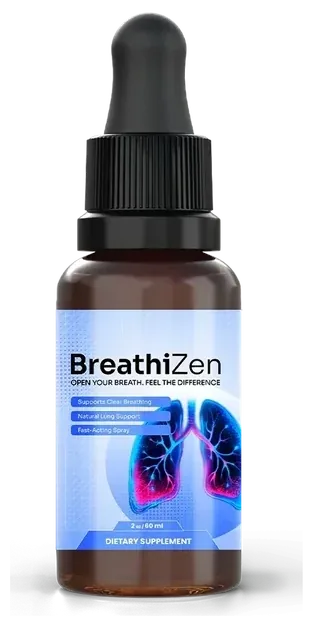
Note the cap. It is a dropper, under a claim bar that calls the product a spray.
No photograph of the back or the base of this bottle was supplied to this desk, so we cannot tell you whether any of it is printed there. We can only tell you we have not seen it.
Twelve markers. Nine are things printed on the front; three are things that should be somewhere on this product and are in nothing we were given.
Swipe the label sideways to reach every marker.
Tap a numbered marker on the label to read what that line says, and what it leaves out.
| As named by the brand | Printed amount | % Daily Value |
|---|---|---|
| Mullein Leaf Extract 10:1 | not published | — |
| Ginger Root Extract | not published | — |
| Bromelain Powder | not published | — |
| Organic Lemon Extract | not published | — |
| Organic Cordyceps militaris Fruit Extract | not published | — |
Five ingredients are named and not one of them carries an amount. No panel, no transcription, no partial, no photograph of one. Be exact about what that means, because the sentence is easy to soften: it does not mean the amounts are low. It means that nobody outside the company knows what they are, and that includes this desk. The method this site exists to run — printed figure against studied dose — cannot be run on this product at all.
The footnotenot applicable — no Supplement Facts panel was supplied
The one figure printed anywhere near an ingredient is 10:1, on the mullein, and it is not a dose. It is a concentration ratio: ten parts of leaf reduced to one part of extract. A 10:1 extract at 5 mg and a 10:1 extract at 500 mg are the same ratio and different products, and nothing supplied to us says which one this is.
Other ingredientsnot published — no other-ingredients list was supplied, so the carrier, the preservative and any sweetener or flavouring are unknown
On a liquid, that is the list where the carrier, the preservative and any sweetener or flavouring would be named. It is also the list four of the ten seals on this product would have to be checked against — non-GMO, gluten free, dairy free and vegetarian are claims about what else is in the bottle. None of it was supplied.
The percentages, recomputedThere are none. A printed percentage is the one number on a panel a reader can check without leaving the label, and this product prints none because it prints no panel. Nothing on this page has been recomputed, because nothing was given to us to recompute.
One further detail is worth having beside the mullein line, because it is the ingredient the brand leads with. The European Medicines Agency monograph covers the flower of the plant; this product uses the leaf, and the monograph’s indication is relief of sore throat rather than anything to do with the lungs. So on the headline ingredient the plant part is wrong as well as the amount missing.
A printed percentage is the one number on a panel a reader can check without leaving the label. On this product there are none, because there is no panel.
| Nutrient | Declared | % DV printed | Daily Value | Our figure | Verdict |
|---|---|---|---|---|---|
| Any ingredient | not published | none printed | — | Nothing to recompute. No Supplement Facts panel was supplied with this product and none appears in any artwork we were given | no panel |
A percentage on a panel is the one number a reader can check without leaving the label, and almost nobody does. We recompute every one we find. On this product there were none to recompute, because there is no Supplement Facts panel to print one on.
What that costs youMore than it sounds. A percentage is a reader’s only self-service check: it lets you catch a wrong unit, a wrong Daily Value or a figure that cannot be right, without trusting anybody. Take the percentages away and the only thing left to go on is the brand’s word.
And what cannot be saidThat the amounts are low. We do not know that and neither does anybody else outside the company. Five names, no weights, no percentages and no panel is the whole of what was supplied, and the honest reading of it is that this product cannot be checked rather than that it fails a check.
Everything else on this site follows from this pass, so it goes first.
There is no Supplement Facts panel for this product in anything supplied to this desk. Five ingredients are named on the sales page. None carries a weight. That single absence disables the method this desk normally uses: take each printed amount, set it beside the dose a published trial actually used, and mark it.
It is worth being precise about what this does and does not mean. It does not mean the amounts are low. It means nobody outside the company knows what they are, and that includes us.
The directions say four pumps of a spray. The bottle has a rubber-bulb dropper. The front label lists Fast-Acting Spray as a claim. The brand's own How Breathizen Works graphic puts a spray icon and a dropper icon in the same picture, around a photograph of a dropper.
This matters past pedantry: 0.60 mL is a measured dose, and four pumps of a calibrated sprayer is a repeatable way to deliver it. A pipette squeezed by hand is not, and no drop count was supplied.
2 oz is 60 mL. The serving is 0.60 mL. 60 ÷ 0.6 = 100 days.
Almost every page in this category assumes a 30-day bottle, and a reader carrying that assumption will price this wrong by a factor of three. Run properly, one bottle is $0.89 a day, three bottles $0.59 and six bottles $0.49 — genuinely cheap per day.
The same arithmetic cuts the other way on the guarantee. Six bottles is 600 days of product bought against a 60-day window.
We opened a reference source for every named ingredient and went looking specifically for breathing, airway or congestion outcomes in humans.
Mullein: the EMA approves it for traditional use only, noting “insufficient evidence from clinical trials” — and its monograph is for the flower, for sore throat, while this product uses the leaf and claims lungs. Ginger: NCCIH covers nausea, menstrual cramps and knee osteoarthritis, and mentions asthma only as a traditional use in a background line. Bromelain: supported for debriding burns; “no proof from clinical trials” for circulatory disorders. Cordyceps: renal studies, mixed exercise results, and “other uses, but doctors haven't studied them”. Lemon extract: nothing we would cite.
Ten reviews, a score, a distribution and an order count were supplied in the same pack as the artwork. We publish all ten unedited and label every card.
Recomputing the distribution supplied — 58/26/10/4/2 — gives a weighted mean of 4.34, against the 4.7 printed. And a detail nobody would notice without doing the bottle arithmetic first: the longest of the ten runs to day 60, on a bottle that lasts 100 days. Not one supplied review covers a full bottle.
Ten seals ship with this listing. None names a certifying body, a certificate number or an issuing laboratory. GMP and Manufactured in USA describe a facility, not a test of this batch. Non-GMO, gluten free, dairy free and vegetarian are composition claims with no panel behind them to check against.
The one that should stop a reader is Doctor formulated. No doctor is named anywhere in the pack as the formulator of this product.
Scroll or use the arrows. Six cards, and the first one explains the other five.
0 amounts published
Start here, because everything else on this site follows from it. This desk was given no Supplement Facts panel for this product. Not a photograph of one, not a transcription, not a partial. The sales page names five ingredients and prints no milligram figure against any of them, and the brand's own How Breathizen Works artwork contains a tile labelled Supplement Facts pointing at a panel nobody has shown us.
So there is nothing on this product to recompute, nothing to set against a trial, and nothing a buyer can check. That is the review.
4 pumps vs a pipette
The sales FAQ is specific: “Shake well. Spray 4 pumps (0.60 mL) into the mouth or onto the tongue once daily.” Every photograph of the product supplied to this desk shows an amber bottle with a rubber-bulb dropper cap, and the bottle’s own front panel lists Fast-Acting Spray as its third claim. The contradiction is printed on the label itself.
The brand’s How Breathizen Works artwork manages to have it both ways in a single picture: one tile reads ORAL SPRAY over a pump-spray icon with mist coming out of it, and the tile directly above it reads BOTTLE LABEL over a dropper icon — while the product photographed in the middle of that same image is a dropper.
You cannot take four pumps with a pipette. If the bottle that arrives has a dropper, the dosing instruction does not describe it, and nothing supplied to this desk says how many drops four pumps is meant to be.
60 mL ÷ 0.60 mL
This is the one piece of arithmetic this label does permit, and it is worth doing because it changes what the packs are. The bottle is 2 oz / 60 mL. The daily serving is 0.60 mL. 60 ÷ 0.6 = 100 days.
So one bottle is over three months, three bottles is roughly ten months, and six bottles is about twenty months — against a refund window of sixty days. Whatever else is true of this product, the larger packs supply far more of it than the guarantee covers.
10:1 ≠ mg
The mullein is named as Mullein Leaf Extract 10:1, and a reader can easily take that for a strength. It is not. 10:1 describes the concentration step — ten parts of raw leaf reduced to one part of extract — and says nothing whatever about how much of the finished extract is in the bottle. A 10:1 extract at five milligrams and a 10:1 extract at five hundred are the same ratio and different products. Without a weight, the ratio is decoration.
10 pictured, 5 named
The asset pack supplied with this product contains ingredient photographs for ten botanicals. The formula names five. The five extra photographs are of marshmallow root, green tea extract, L-theanine, California poppy seed and corydalis root.
Two of those are not breathing ingredients in any sense. California poppy and corydalis are sedative and analgesic botanicals. We are not saying they are in this bottle — we have no panel, so we cannot say what is in this bottle at all. We are saying that the marketing assets for this product do not match the formula described for it, and that one of the ten reviews supplied with it complains that the page “also talked fat-burning herbs”.
3 absences that matter
Beyond the missing amounts, three further things that appear on almost every supplement sold in the United States are absent from everything we were given. There is no caution or warning panel — nothing about pregnancy, nursing, under-18s or medical conditions. There is no other-ingredients list, so the carrier, the preservative and any sweetener or flavouring are unknown. And no FDA disclaimer is visible on the product face we were shown, beneath three claims that carry no dagger or asterisk.
Published in full, as supplied. The first image is the one that contradicts itself twice.

The three numbered steps are follow label directions, product formula and daily routine — which is a diagram of how to take a supplement, not an explanation of how this one works.

Look at the cap in that photograph. It is a rubber-bulb dropper — a pipette you squeeze. Now read the directions supplied with the same product: “shake well, spray 4 pumps (0.60 mL) into the mouth or onto the tongue once daily.”
You cannot take four pumps with a pipette. A pump is a calibrated action on a sprayer; a dropper delivers drops, and how many drops make 0.60 mL depends on the pipette. Nothing supplied to this desk converts one into the other.
This is not a reading we have had to work for. The bottle's own front panel lists Fast-Acting Spray as its third claim, directly above a dropper. The brand's How Breathizen Works graphic puts an ORAL SPRAY tile with a mist icon next to a BOTTLE LABEL tile with a dropper icon, around a photograph of a dropper.
So before you take any of it: call the order desk on +1 (302) 200-3480 and ask what four pumps means in drops, and ask by email so the answer is in writing. On a measured 0.60 mL serving, guessing is the one thing you should not do.
Because it is the most practical thing on this site. A reader who calls and asks that question before the first dose has been better served by us than by a sale.
The ring is a 24-hour clock. The shaded band is the morning window the directions name — the only timing guidance this product gives.
Three claims sit on the front of this bottle and not one of them carries a dagger or an asterisk. On the product face supplied to this desk there is also no FDA disclaimer for a dagger to resolve to. That may sit on a back panel; no photograph of the back or the base of this bottle was supplied to us.
Look at the same artwork again and notice the two tiles beside the bottle. One is labelled ORAL SPRAY and drawn as a pump throwing a mist. One is labelled BOTTLE LABEL and drawn as a dropper. They sit either side of a photograph of a dropper, under a third tile labelled SUPPLEMENT FACTS illustrated with a generic document icon, on a product that has no Supplement Facts panel.
The rest of what is claimed for this product lives somewhere else: on the sales page, in the listing artwork, or on one of ten seals, none of which names a certifying body, a number or a laboratory. Each claim is taken separately below, with whatever it rests on.
A structure-function claim, which is permitted — with the disclaimer it should carry. What it rests on, ingredient by ingredient, is the problem: no amount is published for any of the five, and of the five, not one has human respiratory evidence in the sources we opened. This claim rests on nothing we can check.
Natural has no regulatory meaning here. Lung support is the closest this label comes to naming an organ, and a reader with a diagnosed airway condition is the one most likely to read it as a treatment. NCCIH is explicit that evidence does not support using approaches of this kind instead of proven medical management for asthma.
Two problems in three words. Fast-acting is contradicted by the brand's own review summary, which says most people wait three to six weeks. Spray is contradicted by the bottle the words are printed on, which has a dropper.
A seal, not a label claim, and the one this desk would push on hardest. No doctor is named in anything supplied to us as the formulator. A physician's name was supplied — but for a different job, as the reviewer of these pages, which he has not done. An unnamed doctor is not a credential; it is a word.
Good Manufacturing Practice describes a facility's processes, not a test of what is in this bottle. No certifying body and no certificate number is named. A GMP mark with nothing behind it is a picture of a certificate.
A country-of-origin claim appearing on a listing seal. We can read no country-of-origin wording on the bottle itself in the photographs supplied. It also says nothing about where the raw botanicals were grown.
Four composition claims, and here they run into the same wall as everything else: there is no other-ingredients list and no panel to check them against. No certifying body is named for any of the four. On a liquid product the carrier, preservative and any sweetener are exactly what these claims would turn on, and none of those is published.
Pure is not a defined term and this seal names no standard, no test and no laboratory. The brief gives a certificate reference — B-1164-26-BR — but no certificate was supplied to this desk and we have not seen one.
The one seal with a policy behind it rather than a process, and the terms are stated: 60 days from purchase, with the sales side also asking for at least 30 days of use. What is not stated is whether an opened bottle qualifies, whether a multi-pack can be partly returned, or whether a restocking fee applies. Return shipping is the buyer's cost.
Tap a card to read the quotation and where it came from. Every one was opened by this desk.
The asset pack contains ingredient stills for ten plants. The formula names five. Both sets are published below, labelled.


Taken at face value, $0.49 a day across a six-bottle pack is the cheapest per-day figure this desk has published. If what you want is a morning ritual with herbal ingredients in it, and the absence of printed amounts genuinely does not bother you, that is a coherent position and the price supports it.
If you are already buying these separately and are content without weights, consolidating them into one daily liquid is convenient. Go in knowing you are swapping known doses for unknown ones.
Most buyers in this category assume a 30-day bottle. If you were about to price this against monthly capsules, the bottle lasting over three months is a real and favourable difference — and it is the single most useful thing on this page.
Nine of the ten supplied reviews describe a cue, not an effect — before the first call, after church coffee, when the kettle clicks. On a once-daily product, whether it becomes a habit is the thing that decides whether it is in your life at all.
Start here. NCCIH: “Evidence does not support using complementary health approaches instead of proven medical management for asthma.” Two of the ten supplied reviews say it in their own words, one reporting that their clinic told them to keep the inhaler. This is not an inhaler and not a rescue medicine.
Then this product cannot tell you. No Supplement Facts panel, no amounts, no other-ingredients list. If you read labels before you buy — and if you are on this site you probably do — there is nothing here to read.
Two of the five named ingredients carry interaction notes in the sources we opened: bromelain with warfarin and tetracyclines, cordyceps with anticoagulant, antiplatelet and antidiabetic drugs, plus blood-sugar lowering. No caution panel was supplied with this product at all. Take the ingredient list to whoever manages your prescriptions.
Nothing supplied with this product addresses any of these, which is itself the reason to be careful. Most supplement labels carry a line on each. This one, as supplied to us, carries none.
Six bottles is 600 days of product bought against a 60-day refund window. The per-day price only materialises if you take it for most of two years, and you must decide inside the first two months.
The brand's own summary says most people wait three to six weeks, and the longest supplied review runs to day 60. If a quick answer is what you are buying, the company that sells it has already told you otherwise.
Nothing is sent anywhere and nothing is stored. The answers stay in your browser.
0 of 6 answered
No trial exists on this combination, so no side-effect profile exists for it either. Worse than that: because no amount is published for any ingredient, nobody outside the company can judge whether the quantities here are large enough to matter. What follows is what our sources record about the ingredients themselves.
Start with the absence. No caution or warning statement of any kind was supplied with this product. Nothing on pregnancy, nothing on nursing, nothing on under-18s, nothing on medical conditions, nothing on prescription medicines. Almost every supplement sold in the United States carries some version of that panel. We were given none, and no photograph of the back of the bottle to check.
On bromelain, the clinical summary we opened records that “preclinical studies suggest bromelain may increase the risk of bruising and bleeding” and advises against taking it with blood thinners, and that it “may increase blood and urine levels” of tetracycline antibiotics.
On cordyceps, the same publisher records that it “may increase the adverse effects of antidiabetic or anticoagulant/antiplatelet drugs”, that it “can also lower blood sugar levels and may cause harm”, and that it “may increase your risk of bleeding.” It also notes it “should not be used by those with myelogenous type cancers.”
On the whole category, and this is the line that matters most on a product sold for breathing, NCCIH is unambiguous: “Evidence does not support using complementary health approaches instead of proven medical management for asthma.” Two of the ten supplied reviews make the same point unprompted, one reporting that her clinic told her to keep her inhaler.
And one note about something that is not in the formula. Green tea extract — the ingredient NCCIH attaches a liver-injury caution to — is photographed in this product's marketing assets while not being named among its five ingredients. We have no reason to think it is in the bottle. With no panel, we also have no way to confirm that it is not.
Take the five ingredient names and your current prescriptions to whoever manages them, and say plainly that the amounts are not published. On most products you would photograph the panel; on this one there is nothing to photograph, and that is the thing to tell them.
| Ingredient | Printed amount | What the source says | Verdict |
|---|---|---|---|
| Mullein leaf extract 10:1 | None | EMA: traditional use only; insufficient evidence from clinical trials; indication is sore throat; monograph covers the flower | Wrong plant part, wrong organ |
| Ginger root extract | None | NCCIH: nausea in pregnancy, menstrual cramps, knee osteoarthritis. Asthma appears once, as a traditional use | No research finding on breathing |
| Bromelain powder | None | MSK: supported for debriding burns topically; no proof from clinical trials that it can treat circulatory disorders | No respiratory evidence |
| Organic lemon extract | None | No monograph, fact sheet or trial we would cite for any airway outcome | No source found |
| Organic Cordyceps militaris | None | MSK: renal studies; exercise results mixed; other uses, but doctors haven't studied them to see if they work | Unstudied for this use |
Ours, and it comes before the label's own instruction for a reason. The directions describe a spray and the bottle is a dropper. Call +1 (302) 200-3480 or email [email protected] and get the drop equivalent of 0.60 mL in writing before the first dose.
The label's first word, and worth taking literally. On a botanical liquid, shake well usually means the contents settle — and an unshaken bottle is not the serving the directions describe.
The directions: spray 4 pumps (0.60 mL) into the mouth or onto the tongue once daily. The volume is the part to hold on to, because it is the only measured figure this product gives you.
The label's stated preference and the only timing guidance supplied. No reason is given for it, and none was supplied to this desk.
Ours. Nine of the ten supplied reviews describe a cue rather than an effect — when the kettle clicks, before the first call, after church coffee. A bottle is a hundred days, so whether it becomes a habit is the whole question.
The brand's own review summary says most people wait three to six weeks, whatever Fast-Acting on the front suggests. Note what that does to the refund window: at six weeks you have eighteen days left.
0.60 mL a day is fixed by the directions, and 60 mL a bottle is fixed by the label. Pick a pack and see where it lands against the 60-day window.
Pack size
Servings a day — fixed at one, which is what the label says
All three prices were published in the pack supplied to this desk. The per-day figures are ours, and they depend entirely on a bottle being 100 days.
A hundred days, which already outruns the refund window by forty.
60-day money-back window · no subscription

Three hundred days, about ten months, and the pack most of the ten supplied reviews bought.
60-day money-back window · no subscription

Six hundred days — roughly twenty months — bought under a window that closes after sixty.
60-day money-back window · no subscription
The struck-through figures are $179, $537 and $1,074 — which is $179 multiplied by one, three and six. A crossed-out price is a claim about what something used to sell for, and no date is given on which this product sold at $179 a bottle. We print the struck figures because they are on the offer, and we print this note beside them because a reader deserves to know they are arithmetic rather than history. · The money-back window runs from purchase, not from delivery · What that actually means
This is the part of the product that comes off best, and it is worth being as clear about that as about everything else. All three prices were published: $89 for one bottle, $177 for three at $59 each, $294 for six at $49 each. Many products in this category publish nothing and defer to the checkout.
The figure almost everyone will get wrong is the bottle life. The convention on this shelf is a thirty-day bottle, and at a glance $89 for a month is expensive. But the bottle is 60 mL and the serving is 0.60 mL, so a bottle is a hundred days. That makes the three packs $0.89, $0.59 and $0.49 a day — and $0.49 is the lowest per-day figure this desk has ever published.
Now the same arithmetic in the other direction. Six bottles is 600 days, roughly twenty months. The refund window is 60 days. The brand asks for 30 days of use before a claim and says most people wait three to six weeks to notice anything. So the cheapest pack is the one you must commit to longest while having the least time to judge it.
The struck-through figures are $179, $537 and $1,074. That is $179 multiplied by one, three and six. No date is given on which this product sold at $179 a bottle. We print them because they are on the offer and we print this sentence beside them because they are arithmetic rather than history.
Shipping. It is the one money figure not published anywhere in the pack supplied to us — not for any of the three packs — and neither is delivery speed. Read the total on the payment screen before you pay.
breathizenres.com is a Breathizen authorized U.S. retailer, and we earn a commission on orders placed through it. That disclosure is in the footer of every page and it is why the missing panel is in the first screen of this one.
The brief names mybreathizen.com as the sales page for this product. The buy buttons on this site go to the checkout we were given.
+1 (302) 200-3480, with [email protected] by email, handles tracking, changes and refunds. This is the number to call for the guarantee, and the number to call with the question about drops.
Nothing supplied to this desk names Amazon or any other marketplace as an authorised channel. We have not found one and we accuse nobody of anything — we are telling you what the pack does and does not authorise.
A marketplace sets its own return window, which is not the 60 days described here. If the guarantee is part of why you are buying, buy where the guarantee is.
The amounts, the drop equivalent of four pumps, the certificate of analysis for lot B-26/BR-1164, and whether an opened bottle qualifies for the refund. Ask by email so you have the answers in writing.
The only mark here with a policy behind it. The brief states the terms: a 60-day window from purchase, with the sales side also asking for at least 30 days of use before a claim. Return shipping is the buyer's cost and tracking is advised. It does not say whether an opened bottle qualifies or whether a six-pack can be partly returned. Refunds are quoted at 3–5 business days to credit, then 5–10 days to appear on the card.
No doctor is named anywhere in the pack supplied to this desk as the formulator of this product. A physician's name was supplied with the pack, but for a different role — to be printed as the medical reviewer of these pages, which he has not read. We have not printed it there either. An unnamed doctor is not a credential.
Good Manufacturing Practice is about how a facility runs, not about what is in this bottle. No certifying body and no certificate number is named. It is worth knowing what it is not: it is not a test of this batch, and it is not FDA approval, which no dietary supplement has.
A listing seal. We can read no country-of-origin wording on the bottle itself in any photograph supplied. It also says nothing about where the botanicals were grown — manufacture and sourcing are separate questions and only one is claimed here.
No certifying body is named, and on this product the claim cannot be checked even in principle: there is no other-ingredients list, so the carrier, preservative and any sweetener — the parts most likely to be at issue — are unknown.
Naturally is doing the work here: it suggests the ingredients never contained gluten rather than that the finished product was tested. No threshold, no test and no certifying body is named. If you are coeliac, that distinction is the whole question.

Same position as the gluten mark: a composition claim with no panel and no other-ingredients list to check it against, and no certifying body named.

Plausible on its face — the five named ingredients are all botanical or fungal. But a liquid needs a carrier and usually a preservative, and none of those is published, so the claim rests on the parts of the formula nobody has shown us.

Natural has no regulatory definition in this context. It is not a safety claim, not a purity claim and not a strength claim. Several of the most potent substances known are natural; so is water.

Pure names no standard, no contaminant tested for and no laboratory. The brief gives a certificate reference, B-1164-26-BR, against lot B-26/BR-1164. No certificate was supplied to this desk and we have not seen one, so we cannot tell you what it covers — heavy metals, microbials, potency, or nothing.
Every figure and every word below was supplied to this desk in the same pack as the label artwork. We did not collect these reviews, cannot contact the people named, and cannot confirm that any portrait is a photograph of that person. They are published in full and unedited because hiding them would be the less honest choice, and labelled on every card because presenting them as independent would be the dishonest one.

I travel for installs. Taste is herbal. Fine. Change was slower than the page. I keep it by the hymnals. I take it when the news radio starts.

I teach, then I commute. I keep my inhaler. This is not that. Clinic said keep the inhaler. I keep it in the tackle box. Alarm is a sticky note, not the phone.

I keep a workshop in the garage. Morning walk. Spray before I leave so I don't skip it at lunch. I keep it on the sewing table. Old bottle went in the trash first.

I golf twice a week, that's the clock. Hotel. Travel size in the toiletry bag. Four pumps still happened. I keep it next to the PT bands. I take it when the porch light goes on.

I take care of my dad after work. The page also talked fat-burning herbs. My bottle is a breath spray. I follow the bottle. I keep it in the ferry bag. I take it when the kettle clicks.

I do night security. Church choir. That's my scorecard. Not a lung-function lab. I keep it by the crossword mug. I take it when the dryer buzzes.

I bake at 5, then I sit down. Shake, four pumps, then coffee. Construction dust is the use case. Not an inhaler replacement. I keep it on the barn nail. I take it before the first call.

I coach rec ball, evenings are loud. Seasonal congestion. Nights vary. I still take the morning spray. I keep it in the shop apron. I take it after church coffee.

I live with my sister. We share a shelf. Wanted week-one stairs to feel easy. They didn't. Desk walked the window. Kept three. I keep it by the bus keys. I take it when the ferry horn goes.

I work from the kitchen table. Quit smoking years ago. Stairs are the scorecard. Spray is extra. I keep it on the bleacher tote. I take it before I walk the mall.
All ten reviews, the 4.7 score, the star distribution, the order count and the recommend percentage were supplied to this desk in the same pack as the product artwork. We did not collect them, did not solicit them, and have not edited a word of them.
We cannot contact any of the ten people named, cannot confirm that any portrait is a photograph of that person, and cannot confirm that any of them bought or took the product. We publish them because hiding them would be less honest than labelling them, not because we can stand behind them.
The distribution supplied — 58/26/10/4/2 — gives a weighted mean of 4.34, not the 4.7 printed beside it. The ten cards published average 4.1. We show all three figures rather than choosing one.
This site publishes no Review and no AggregateRating structured data anywhere for these. Google's own guidance is that ratings must be sourced directly from users; these were sourced from the seller. Putting them in the page's code would place a star rating in search results on the strength of figures we have just told you we cannot verify.
Those are reserved for reviews this desk collects itself, from buyers who ordered through this site. They are deliberately blank. When there are real ones, they will go there and they will be marked as independently collected.
With the supply each one actually represents, which the artwork does not say.
60 days from purchase is the window. 30 days of use is what the sales side asks for before a claim. Together they leave roughly a month in which the decision actually gets made.
It carries the order ID, which is the first thing the desk will ask for, and the date the sixty days run from.
Start the claim on the phone. An unexpected parcel is much harder to match to an order at the other end.
Full name, the email address on the order and the order ID, written on a sheet inside the parcel.
To 650 Fifth Avenue, Floor 10, New York, NY 10019. Return shipping is the buyer's cost and tracking is advised — an untracked parcel that does not arrive is your loss, and on a six-bottle box that is $294.
Three to five business days for the desk to credit it once the return is processed, then five to ten days for the money to reach the card.
Whether an opened bottle qualifies, whether a multi-pack can be partly returned, and whether a restocking fee applies. None is stated anywhere in the pack. Ask on the phone before you buy six.
| Conflict | What we did |
|---|---|
| The directions describe a spray; the bottle is a dropper | The sales FAQ says “shake well, spray 4 pumps (0.60 mL)”. Every photograph supplied shows a rubber-bulb pipette. We print both and tell you they cannot both describe the bottle that arrives. If yours has a dropper, ask the order desk what four pumps means in drops before you take any of it. |
| The bottle's own front panel calls it a spray | Fast-Acting Spray is the third claim bar on a bottle fitted with a dropper. This is not brief-versus-artwork; it is one piece of artwork contradicting itself. Printed as found. |
| The How Breathizen Works graphic shows both a spray and a dropper | One tile reads ORAL SPRAY over a pump-and-mist icon; the tile above it reads BOTTLE LABEL over a dropper icon; the product in the middle is a dropper. We describe the image rather than resolving it, because we cannot know which is the bottle you will be sent. |
| The same graphic points at a Supplement Facts panel that does not exist in the pack | A tile labelled SUPPLEMENT FACTS appears in the artwork, illustrated with a generic document icon. No panel was supplied to this desk in any form. We say so wherever a panel would normally be printed, rather than leaving the space blank. |
| The rating printed is 4.7; the distribution supplied works out to 4.34 | 58% five, 26% four, 10% three, 4% two, 2% one gives a weighted mean of 4.34. We print the recomputation and show the arithmetic, and we publish no AggregateRating structured data for brand-supplied figures. |
| Fast-Acting against the brand's own three-to-six-week figure | Both came from the same company in the same delivery. We print both side by side and let the contradiction stand where a reader can see it. |
| A review reports buying two bottles; no two-bottle pack is sold | Rita Y.'s card says 2 bottles. The price list has one, three and six. We publish the review unedited and note the discrepancy rather than quietly correcting a customer's own words. It may be an older pack structure, or an error. |
| A review says the page talked about fat-burning herbs | Rita Y. again: “The page also talked fat-burning herbs. My bottle is a breath spray.” Nothing in the pack supplied to this desk mentions weight loss. Printed as written, because a buyer read something somewhere, and because the artwork does photograph five botanicals the formula never names. |
| The seals claim vegetarian, gluten free, dairy free and non-GMO with no panel to check | Four composition claims and no other-ingredients list. We print the claims and the absence together, on the same page, rather than reproducing a seal grid without comment. |
| Doctor formulated, with no doctor named | Printed as the gap it is. The one physician named in the pack was offered as a reviewer of these pages, not as the formulator, and he has not reviewed them. |
| A 10:1 extract ratio printed where a dose would go | We print it as a ratio and say plainly that it is not a dose. Ten parts leaf to one part extract tells you nothing about how much extract is in the bottle. |
| Ten seals, zero certificates | Every mark names a quality and none names an issuer, a number or a laboratory. Each seal is printed with what it actually establishes, which in most cases is nothing about this batch. |
| The brief spells it Breathizen; the bottle spells it BreathiZen | Trivial, and recorded for completeness. We follow the brief in our own sentences and the bottle when quoting the bottle. |
2.0 out of 5 — and the shape of that number matters far more than the number itself.<p>This product scores zero on two rows, and it is the same zero twice: there is no Supplement Facts panel and there are no amounts. Everything this desk normally does — take a printed figure, set it beside the dose a published trial used, mark it, show the working — is impossible here. Not difficult. Impossible. Five ingredients are named and that is the entire disclosure.</p><p>It is not a product with weak evidence. It is a product where the evidence question cannot be asked, and where the sources behind the named ingredients, when you do open them, point away rather than nowhere: the EMA approves mullein for traditional use only, for a sore throat, using the flower rather than the leaf that is in this bottle.</p><p>Two rows score well and both deserve saying plainly. The price is transparent and the per-day cost is genuinely low — $0.49 a day on the six-bottle pack, the cheapest figure this desk has ever published, once you notice that a bottle lasts 100 days rather than 30. The company also publishes a phone number, two email addresses and two postal addresses, which is more accountability than many.</p><p>And one thing is simply wrong rather than merely undisclosed: the directions describe four pumps of a spray and the bottle has a dropper, a contradiction printed on the label itself. Before taking any of it, ask the order desk what four pumps means in drops.</p><p>We sell this product and earn when you buy it through this site. That is exactly why this paragraph is at the top of the page instead of the bottom.</p>

The desk reads the label at native resolution, recomputes every figure on it, and opens every source it cites. On this product there was no panel to read, so what this site publishes instead is a complete and specific account of what is missing. It earns a commission on orders placed through this site, which is why that account is at the top of the page rather than the bottom.
These slots are vacant on purpose. A physician's name was supplied with the product pack and we were asked to print it as the medical reviewer of these pages. He has not read them — they were written after the pack arrived — so printing his name would assert a professional endorsement that has not happened. On a product sold to people with breathing problems, that matters more than usual.
Sources are listed in full on every page that makes a claim · Our method and who writes this · Report a correction
Every source above was opened and read. Studies that found nothing are included on purpose.
We ran this product and its category through live search and read what the result pages are made of. Almost every query is defensive — is it a scam, does it really work, what are the side effects, is it FDA approved, is it a spray or a dropper. Here are the fifteen most common, in the words people type, each answered in one paragraph and linked to the page that shows the working.
Ten were supplied to this desk in the same pack as the artwork, with photographs. We publish all ten unedited, labelled on every card as brand-supplied. We also recomputed the summary: the star distribution given to us works out to 4.34, not the 4.7 printed beside it. And not one of the ten runs past day 60, on a bottle that lasts 100 days. This site emits no Review or AggregateRating structured data anywhere.
All ten, in fullFive ingredients are named: mullein leaf extract 10:1, ginger root extract, bromelain powder, organic lemon extract and organic Cordyceps militaris. Not one of them carries an amount. No Supplement Facts panel was supplied to this desk and none appears in any artwork we were given, so there is no dosage to report — not a low one, not a high one, none.
What is and is not publishedNot a question this desk answers with a yes or a no, because the honest answer is a list. There is a real company behind it, a real refund line and a stated 60-day window. There is also no panel, no amounts, no caution statement, no other-ingredients list and no FDA disclaimer on the face we were shown, and the bottle in every photograph is a dropper while the directions describe four pumps of a spray. We print all of it and let you decide.
Everything we could not verifyNo published trial exists on this combination, and because no amounts are printed, the usual check — set each ingredient beside the dose its own research used — cannot be run at all. What we can tell you is what the reference sources say about the ingredients themselves, and on breathing specifically they are thin to empty. The EMA approves mullein for traditional use only, for sore throat, and for the flower rather than the leaf this product uses.
Every ingredient, every sourceNo caution or warning panel was supplied with this product at all — nothing on pregnancy, nursing, under-18s or medical conditions. That absence is itself the finding. From the sources we opened: bromelain carries bleeding-risk and tetracycline interaction notes, and cordyceps “may increase the adverse effects of antidiabetic or anticoagulant/antiplatelet drugs.”
Interactions and cautionsNo, and no supplement is. The FDA does not approve dietary supplements before sale. Anything claiming otherwise is wrong. The seals on this listing say GMP and Manufactured in USA; neither names a certifying body or a certificate number, and no FDA disclaimer is visible on the product face supplied to us, under three claims that carry no dagger.
What the seals actually meanNothing in the pack supplied to this desk mentions Shark Tank, any television appearance, or any celebrity. We looked because people search for it. If you have seen a page claiming it, that page is not this one and we would treat everything else on it with the same suspicion.
How we check a claim$89 for one bottle, $177 for three ($59 each) and $294 for six ($49 each). Because a bottle is 100 days and not 30, those work out at $0.89, $0.59 and $0.49 a day. The struck-through figures are $179, $537 and $1,074 — which is simply $179 multiplied by the number of bottles.
All three packs comparedBoth, according to the brand. The directions say “spray 4 pumps (0.60 mL)”; the bottle in every photograph has a rubber-bulb dropper; and the front label lists Fast-Acting Spray as a claim. The brand's own How Breathizen Works graphic shows a spray icon and a dropper icon in the same picture. You cannot take four pumps with a pipette.
What the label actually says60 days from purchase, and the sales side also asks for at least 30 days of use before a claim — which leaves about 30 days to decide. Set that against the brand's own figure that most people wait three to six weeks to notice anything, and against a six-bottle pack holding 600 days of product.
The window, worked throughThis is a dietary supplement. It is not an inhaler, not a rescue medicine and not a treatment for asthma or COPD. NCCIH is unambiguous: “Evidence does not support using complementary health approaches instead of proven medical management for asthma.” Two of the ten supplied reviews say the same thing in their own words — one of them reports their clinic told them to keep the inhaler.
Who this is not forThe headline ingredient, and the one with least behind it. The European Medicines Agency approves mullein for traditional use only, noting “insufficient evidence from clinical trials”. Two details matter: the indication is sore throat with a dry cough, not lungs — and the monograph covers the flower, while this product uses the leaf. Note also that 10:1 is a concentration ratio, not a dose.
Mullein, in full100 days, and this is the one calculation the label does let you run. The bottle is 2 oz / 60 mL and the serving is 0.60 mL, so 60 ÷ 0.6 = 100. One bottle is over three months and six bottles is about twenty. Most pages in this category assume a 30-day bottle; this one is not.
What that does to the priceOne of the ten seals on this listing reads Doctor formulated. No doctor is named anywhere in the pack supplied to this desk as the formulator. A physician's name was supplied to us for a different purpose — to print as the medical reviewer of these pages — and we have not printed that either, because he has not read them.
Why the reviewer line is blank+1 (302) 200-3480 for tracking, changes and refunds, and [email protected] by email. Returns go to 650 Fifth Avenue, Floor 10, New York, NY 10019. For anything about this website rather than an order, write to us at [email protected].
All contact detailsThese are the questions this product is actually searched with, taken from live search results rather than guessed at. Several of them have answers the brand would rather we did not print.
A dietary supplement sold as a liquid oral spray for breathing comfort. One bottle is 2 oz / 60 mL and the stated serving is 4 pumps (0.60 mL) once daily, which makes a bottle 100 days. Five ingredients are named: mullein leaf extract 10:1, ginger root extract, bromelain powder, organic lemon extract and organic Cordyceps militaris. No Supplement Facts panel was supplied to this desk and no amount is published for any of them.
There isn't one. No Supplement Facts panel was supplied to this desk with this product, and none appears in any artwork we were given — not on the bottle front, and no photograph of the back or wrap was supplied at all. The brand's own How Breathizen Works graphic contains a tile labelled SUPPLEMENT FACTS, illustrated with a generic document icon.<p>This is the largest single absence this desk has encountered, and most of this site follows from it.</p>
Not published. Five ingredients are named and not one carries a weight. We cannot tell you, the sales page does not tell you, and without a panel nobody outside the company can. It is worth being exact about what this means: it does not mean the amounts are low. It means they are unknown.
This is the question this desk cannot answer for you, and it is the sharpest problem with the product. The directions say “shake well, spray 4 pumps (0.60 mL)”. Every photograph supplied to us shows a rubber-bulb dropper. The bottle's own front panel lists Fast-Acting Spray as a claim, and the brand's How Breathizen Works graphic shows a spray icon and a dropper icon in the same picture. You cannot take four pumps with a pipette. Ask the order desk what four pumps means in drops before you take any of it.
100 days. The bottle is 2 oz / 60 mL and the daily serving is 0.60 mL, so 60 ÷ 0.6 = 100. This is the one calculation the label lets you run, and most pages in this category assume a 30-day bottle.
No published trial exists on this combination, and because no amounts are printed, the usual check cannot be run at all. What we can report is what the reference sources say about the named ingredients, and on human breathing outcomes they are thin to adverse. The EMA approves mullein for traditional use only, for sore throat, and for the flower rather than the leaf in this bottle. NCCIH's ginger page covers nausea, cramps and knee osteoarthritis. The cordyceps summary says “doctors haven't studied them to see if they work.”
$89 for one bottle, $177 for three ($59 each) and $294 for six ($49 each), with struck-through figures of $179, $537 and $1,074. All of those were published in the pack supplied to this desk. Confirm at the live checkout.
$0.89, $0.59 and $0.49 for the one-, three- and six-bottle packs. Those figures depend entirely on getting the bottle life right: 60 mL at 0.60 mL a day is 100 days, not 30. Priced against an assumed monthly bottle you would be out by a factor of more than three.
A 60-day window from purchase, and the sales side also asks for at least 30 days of use before a claim. Those together leave roughly a month of real decision time. Claim by calling +1 (302) 200-3480 with the order ID. Return shipping is the buyer's cost and tracking is advised. Refunds are quoted at 3–5 business days to credit, then 5–10 days to appear on the card.
From the sources we opened, yes — two of the five named ingredients carry interaction notes. Bromelain: preclinical work suggests it “may increase the risk of bruising and bleeding” with warfarin, and it “may increase blood and urine levels” of tetracycline antibiotics. Cordyceps: it “may increase the adverse effects of antidiabetic or anticoagulant/antiplatelet drugs” and “can also lower blood sugar levels and may cause harm.” Because no amounts are published, nobody can say whether the quantities here are enough to matter. Take the ingredient list to whoever manages your prescriptions.
No. NCCIH is explicit: “Evidence does not support using complementary health approaches instead of proven medical management for asthma.” This is a dietary supplement, not a rescue medicine. Two of the ten supplied reviews make the same point unprompted — one reports that her clinic told her to keep the inhaler.
Nobody, and the slot is left visibly empty rather than filled. A physician's name was supplied with the product pack with instructions to print it as the medical reviewer of these pages. He has not read them — they were written after the pack arrived. Printing the name would assert a professional endorsement that has not happened, on a product sold to people with breathing problems.
One bottle is 100 days against a 60-day window, so no pack can be finished inside it. The smallest is still the smallest bet: $89, $0.89 a day, and the only one that does not commit you to years of a product whose amounts are not published.
The struck-through figures are $179, $537 and $1,074 — which is $179 multiplied by one, three and six. A crossed-out price is a claim about what something used to sell for, and no date is given on which this product sold at $179 a bottle. We print the struck figures because they are on the offer, and we print this note beside them because a reader deserves to know they are arithmetic rather than history. · window runs from purchase · no subscription · not for under 18, pregnancy or nursingWritten and fact-checked by The Breathizenres Editorial Desk, last updated October 11, 2026. A highlighted slot means that value has not been supplied yet and nothing has been invented in its place — why the reviewer line is empty.