How Breathizen Works
No trial exists on this combination, and because no amount is published the check this desk exists to run cannot be run at all. Here is what is left.
Written by the Breathizen editorial team·Last updated October 11, 2026·How this page was checked
Breathizen is a dietary supplement, not a medicine, and the honest answer has two parts. No published trial exists on this combination of five ingredients, so there is no figure for how often it helps, how much it helps or how long it takes. And because no amount is published for any of the five, the comparison this desk normally runs — the figure on the label against the dose the research used — has nothing on either side of it. No Supplement Facts panel was supplied in any form. The brand's own graphic is titled How Breathizen Works and shows three numbered steps: follow label directions, product formula, daily routine. That is a diagram of how to take a supplement, not an explanation of how this one works. The same graphic carries a tile labelled SUPPLEMENT FACTS, illustrated with a generic document icon, pointing at a panel that does not exist anywhere in the pack.
The brand's own explainer, in full
Two pieces of listing artwork, published as supplied. Read the tiles on the first one, and count how many of them describe a mechanism.

The three numbered steps are follow label directions, product formula and daily routine — which is a diagram of how to take a supplement, not an explanation of how this one works.

What the three-step graphic actually shows
The artwork supplied with this product is titled How Breathizen Works. It has three numbered steps: 01 follow label directions, 02 product formula, 03 daily routine.
The first is an instruction. The second is a noun. The third is a habit. No mechanism, no ingredient, no amount and no outcome appears anywhere in it. It is a diagram of how to take a supplement, which is a different subject from how this supplement works.
That much is not unusual, and the reason is regulatory caution rather than deceit: a supplement that explains a mechanism too precisely starts to describe a drug. But caution in the marketing is not caution in the buyer.
Two tiles in that graphic do more than say nothing. The first is labelled SUPPLEMENT FACTS and is illustrated with a generic document icon, the outline of a sheet of paper. It points at a document that was not supplied with this product in any form: no panel, no photograph of one, no transcription, no partial. The brand's own explainer refers a buyer to the one page that would make this formula checkable, and that page does not exist anywhere in the pack.
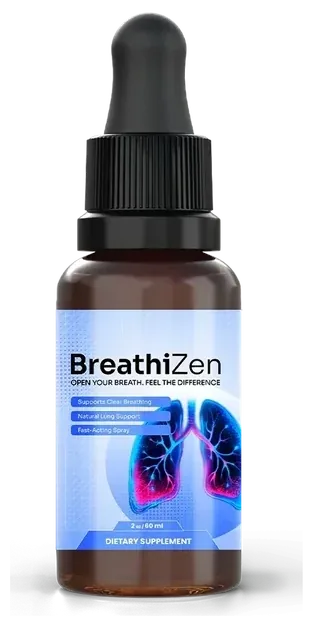
The second pair contradicts itself inside a single picture. One tile reads ORAL SPRAY over a pump-and-mist icon; the tile directly above it reads BOTTLE LABEL over a dropper icon; and the product photographed between them is an amber bottle with a rubber-bulb dropper cap. You cannot take four pumps with a pipette.
So the rest of this page does the job the artwork declines to do: from the sources rather than from the brand, with the amounts left blank.
Why the check this desk exists to run cannot be run here
On every other product this site has read, the method takes two numbers: the amount printed on the panel, and the dose the published research used. Put them side by side and the reader learns what fraction of the studied dose they are buying.
On Breathizen that method has no inputs. Five ingredients are named and zero carry an amount, and there is no serving-size line because there is no panel for one to sit on. So the left-hand side of the comparison is empty, and the recomputation that is the whole point of this desk cannot be attempted — not estimated, not inferred. It cannot be run at all.
Be exact about what that does not imply. It does not mean the amounts are low. They may be generous or trivial. Nobody outside the company can tell, and a reader who assumes either way is guessing.
What is left is the reference material, and it points away rather than nowhere. The European Medicines Agency's monograph on mullein is for traditional use only, records “insufficient evidence from clinical trials”, gives the indication as “relief of sore throat associated with dry cough and cold” and covers the flower while this product uses the leaf. Ginger's research findings are nausea, cramps and knee osteoarthritis, with asthma appearing once as something it “was traditionally used” for. Bromelain is an enzyme from pineapple stems, supported for debriding burns topically. On organic lemon extract we found no source we would cite for any airway outcome. And cordyceps gets the sentence that settles it: “Cordyceps has other uses, but doctors haven't studied them to see if they work.”
And then the line about the whole category. NCCIH's asthma digest is unambiguous: “Evidence does not support using complementary health approaches instead of proven medical management for asthma.” That digest covers acupuncture, breathing techniques, meditation, yoga, omega-3s, probiotics, soy isoflavones and vitamin D, and it does not discuss herbal or botanical products for asthma at all. So it is not a verdict on this formula. It is a verdict on swapping a treatment for a supplement.
Stop a prescribed treatment. Two of the ten reviews supplied with this product make that point unprompted, one of them reporting that her clinic told her to keep her inhaler.
Six sources, in their own words
Tap a card to read the quotation and where it came from. Every one of these was opened by this desk, and every quotation is verbatim.
What “no trial on this combination” actually means
It does not mean the product is unsafe, and it does not mean the ingredients do nothing. Four of the five are common botanicals with a real literature behind them, even where that literature is about nausea or kidneys rather than lungs.
What it means is that nobody has given this combination to a group of people and compared them against a group who got nothing. So there is no figure for how often it helps, how much, or how long it takes. Any such number you are shown about this product has been invented.
On most products that is where the paragraph ends. Here a second step is missing. A trial is run at a stated dose, and the usual next move is to compare that dose with the amount on the label. There is no amount on the label. So the absence is not only that this formula has not been tested — it is that the formula has not been described in enough detail for a test of it to be designed.
One more thing the brand's own pack establishes against its own front panel. The third claim bar reads Fast-Acting Spray. The review summary supplied in the same delivery says most people wait three to six weeks. We print both.
And the disclosure, because it belongs here rather than in a footer. This site is a Breathizen authorised U.S. retailer and earns a commission on orders placed through it. That is why the missing panel is in the first screen of every page here. A page that is paid when you buy should be the page that tells you what it cannot tell you.
How Breathizen Works: common questions
Does Breathizen work?
No published trial exists on this combination, and because no amounts are printed, the usual check cannot be run at all. What we can report is what the reference sources say about the named ingredients, and on human breathing outcomes they are thin to adverse. The EMA approves mullein for traditional use only, for sore throat, and for the flower rather than the leaf in this bottle. NCCIH's ginger page covers nausea, cramps and knee osteoarthritis. The cordyceps summary says “doctors haven't studied them to see if they work.”
Where is the Supplement Facts panel?
There isn't one. No Supplement Facts panel was supplied to this desk with this product, and none appears in any artwork we were given — not on the bottle front, and no photograph of the back or wrap was supplied at all. The brand's own How Breathizen Works graphic contains a tile labelled SUPPLEMENT FACTS, illustrated with a generic document icon.<p>This is the largest single absence this desk has encountered, and most of this site follows from it.</p>
How many milligrams of each ingredient are in it?
Not published. Five ingredients are named and not one carries a weight. We cannot tell you, the sales page does not tell you, and without a panel nobody outside the company can. It is worth being exact about what this means: it does not mean the amounts are low. It means they are unknown.
What does 10:1 mean on the mullein?
It is a concentration ratio, not a dose. It says ten parts of raw leaf were reduced to one part of extract. It tells you nothing about how much of that extract is in the bottle. A 10:1 extract at 5 mg and a 10:1 extract at 500 mg are the same ratio and completely different products. Without a weight beside it, the ratio is decoration.
What is ginger root extract doing in it?
We do not know, because no amount is published and no rationale was supplied. NCCIH's ginger page reports possible benefit for nausea and vomiting in pregnancy, menstrual cramps and knee osteoarthritis. Asthma appears once on that page, as a condition ginger “was traditionally used” for — explicitly folk history, not a research finding.
Does it interact with any medicines?
From the sources we opened, yes — two of the five named ingredients carry interaction notes. Bromelain: preclinical work suggests it “may increase the risk of bruising and bleeding” with warfarin, and it “may increase blood and urine levels” of tetracycline antibiotics. Cordyceps: it “may increase the adverse effects of antidiabetic or anticoagulant/antiplatelet drugs” and “can also lower blood sugar levels and may cause harm.” Because no amounts are published, nobody can say whether the quantities here are enough to matter. Take the ingredient list to whoever manages your prescriptions.
If you are going to try Breathizen, try it this way
One bottle is 100 days against a 60-day window, so no pack can be finished inside it. The smallest is still the smallest bet: $89, $0.89 a day, and the only one that does not commit you to years of a product whose amounts are not published.
The struck-through figures are $179, $537 and $1,074 — which is $179 multiplied by one, three and six. A crossed-out price is a claim about what something used to sell for, and no date is given on which this product sold at $179 a bottle. We print the struck figures because they are on the offer, and we print this note beside them because a reader deserves to know they are arithmetic rather than history. · window runs from purchase · no subscription · not for under 18, pregnancy or nursing