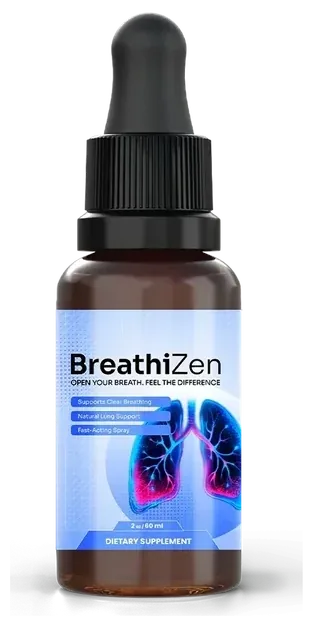
Is the cap a pump or a dropper?
Ask it in those words, about the bottle that will be shipped to you. +1 (302) 200-3480, or [email protected] in writing.
You cannot take four pumps with a pipette. The label calls this product a spray, and the cap in every photograph is a dropper.
Written by the Breathizen editorial team·Last updated October 11, 2026·How this page was checked
The directions supplied with Breathizen read: shake well, spray 4 pumps (0.60 mL) into the mouth or onto the tongue once daily, morning before the first meal preferred. Every photograph of the bottle supplied to this desk shows a black rubber-bulb dropper cap. You cannot take four pumps with a pipette. The label itself calls the product a spray: Fast-Acting Spray is the third of its three front claim bars, and the brand's How Breathizen Works graphic puts an ORAL SPRAY tile with a pump and mist icon beside a BOTTLE LABEL tile with a dropper icon, around a photograph of a dropper. Nothing supplied converts four pumps into drops, so ask the order desk on +1 (302) 200-3480 first.

Most of what this desk finds on a label is something undisclosed: a missing amount, a blend with no ceiling, a badge with no certifier. A gap is answered by saying plainly that nobody published the figure. This one is not a gap. It is a contradiction, and both halves are printed by the same brand.
The directions describe an oral spray taken in four pumps. The bottle in every photograph supplied to this desk has a black rubber-bulb dropper cap — a pipette you squeeze, which delivers drops.
A pump is a calibrated action: the mechanism meters the volume, which is why a pump count can stand in for a measurement at all. A dropper meters nothing. How many drops make 0.60 mL depends on the bore of the pipette, the viscosity of the liquid and how hard the bulb is pressed. You cannot take four pumps with a pipette, and nothing supplied converts the one into the other.
Four statements from material supplied with this product. Three describe a spray; the fourth shows a dropper.
| What it says | Where it is printed | Device described | What it needs to be true |
|---|---|---|---|
| “spray 4 pumps (0.60 mL)” | The directions supplied with the product | A pump sprayer | A metered pump delivering 0.15 mL a stroke |
| Fast-Acting Spray | The third of three claim bars on the bottle front | A pump sprayer | The same, in the label's own wording |
| ORAL SPRAY tile, pump and mist icon | The brand's How Breathizen Works graphic | A pump sprayer | The same again, drawn rather than written |
| BOTTLE LABEL tile, dropper icon, over a photograph of a dropper | The same graphic, beside the tile above | A rubber-bulb dropper | A drop count, which nothing supplied provides |
Three statements for a spray, one for a dropper, and the last two sit in the same picture. The brand is not hiding this; it is printing both.
Breathizen is a 2 oz / 60 mL liquid, taken as four pumps — 0.60 mL — once a day. It names five ingredients: mullein leaf, ginger root, bromelain, lemon and cordyceps. No Supplement Facts panel was supplied with it in any form, so not one of those five carries a printed amount. What can be checked is the arithmetic: 60 mL at 0.60 mL a day is a hundred days a bottle, not thirty.
60-day money-back window · from $0.49 a day · 100 days a bottle · ships from the USThe difference is not a detail of vocabulary: it is the difference between a measurement and an estimate. A pump sprayer carries a dip tube and a metering chamber. Each full stroke moves a fixed volume, which is why a maker can write four pumps and mean a number of millilitres. Four pumps of 0.60 mL means a chamber holding 0.15 mL — a figure that follows from the directions by division, and the only part of this arrangement that is calculable.
A rubber-bulb dropper carries no chamber and meters nothing. It releases drops at whatever size the bore and the liquid produce, which is why dropper volumes are usually printed in millilitres or drops.
So the instruction fails on the device in the photograph: a reader has been told to perform four of an action the cap cannot perform, towards a total it will not measure. The honest instruction would be a volume, a drop count or a graduation mark, and none of the three is supplied.
0.60 mL a day, stated precisely — more specificity than the five ingredients get between them. It is also what makes the question worth asking: a measured serving you cannot measure is worse than a vague one, because it looks exact.

This is the image that makes the contradiction impossible to put down to a stray word in a listing. One tile is labelled ORAL SPRAY and illustrated with a pump bottle and a mist. Beside it, a tile labelled BOTTLE LABEL is illustrated with a dropper. Both sit around a photograph of a bottle whose cap is a rubber bulb.
So within one piece of artwork the product is drawn as a sprayer, drawn as a dropper and photographed as a dropper. A reader who looks only at the icons will prime a pump that is not there.
The same graphic carries a third tile labelled SUPPLEMENT FACTS, illustrated with a generic document icon. It is the nearest thing to a panel in this pack, because none was supplied in any form. When the contents are unpublished, the delivery is the only thing left to get right.
On a product with a vague instruction — a dropperful, a teaspoon, as directed — a reader already knows they are estimating. This product does the opposite: it names a volume to two decimal places and then shows a device that cannot produce it. A precise number attached to an unusable action is worse than an approximate one, because it reads as settled. Nobody double-checks 0.60 mL.
Then consider what sits on either side of that volume. No amount is published for any of the five named ingredients, so nobody outside the company knows what a 0.60 mL serving contains. And no caution or warning statement of any kind was supplied — nothing on pregnancy, nursing, under-18s, medical conditions or prescription medicines.
Two of the five carry interaction notes in the sources this desk opened: bromelain, which “may increase the risk of bruising and bleeding” on a preclinical reading, and cordyceps, which “may increase your risk of bleeding.”
The serving size is the only measured figure on this label, the device shown cannot measure it, and guessing upwards is the one thing a reader should not do. Which makes this the cheapest useful action on the site: one phone call before the first dose.
Ask it in those words, about the bottle that will be shipped to you. +1 (302) 200-3480, or [email protected] in writing.
The only answer that resolves the directions. A graduated pipette with a 0.60 mL mark would do as well. Nothing supplied gives either.
If the bottle in your hand prints something different, the bottle is the instruction. Tell us too: [email protected].
The directions say four pumps. The cap in every photograph is a rubber bulb. A pump meters a volume; a dropper does not, and nothing supplied converts four pumps into drops. The serving is a measured 0.60 mL, so this is a question with a right answer. Call +1 (302) 200-3480 before the first dose, and ask by email.
This post rests entirely on what arrived in the pack, so here is what that was.
One product face. The front of the bottle, read at native resolution and transcribed in full: the BreathiZen wordmark, the strapline OPEN YOUR BREATH. FEEL THE DIFFERENCE, three claim bars, a lung illustration and 2 oz / 60 ml.
No photograph of the back or the base. Neither was supplied, which matters because a back panel is where a drop count, a graduation note or a caution would normally sit.
The directions, as text, and a listing graphic that draws the product twice, once as a sprayer and once as a dropper. That is the whole evidence base.
That the product is fake. A mismatch between artwork and a direction line is the commonest packaging error there is, and it usually means a listing was assembled from a template faster than it was proofread. Ask a question rather than assume bad faith.
That the dose is dangerous. Nobody can say that either way, which is the real point: no amount is published for any of the five named ingredients, so neither a careful 0.60 mL nor a generous squeeze can be set against a figure.
That the rest of the label is wrong. It is not. The serving size is stated precisely, the prices in full, and the guarantee carries a number of days. This is one contradiction, printed in three places by the brand itself, and it deserves one phone call rather than a general suspicion.

The desk reads the label at native resolution, recomputes every figure on it, and opens every source it cites. On this product there was no panel to read, so what this site publishes instead is a complete and specific account of what is missing. It earns a commission on orders placed through this site, which is why that account is at the top of the page rather than the bottom.
These slots are vacant on purpose. A physician's name was supplied with the product pack and we were asked to print it as the medical reviewer of these pages. He has not read them — they were written after the pack arrived — so printing his name would assert a professional endorsement that has not happened. On a product sold to people with breathing problems, that matters more than usual.
Sources are listed in full on every page that makes a claim · Our method and who writes this · Report a correction
Written and fact-checked by The Breathizenres Editorial Desk, last updated October 11, 2026. A highlighted slot means that value has not been supplied yet and nothing has been invented in its place — why the reviewer line is empty.